US Dollar - USD
- Turkish Lira - TRY
- US Dollar - USD
- Euro - EUR
- Pound sterling - GBP
- Russian Ruble - RUB
- Chinese Yuan - CNY
- Georgian lari - GEL
- Saudi Riyal - SAR
- UAE Dirham - AED
- Syrian Pound - SYP
Acquiring a second passport through tangible real estate remains one of the most resilient wealth-preservation strategies for global families in 2026. Turkey stands out among citizenship-by-investment jurisdictions because it offers a straightforward pathway rooted in direct property ownership rather than non-refundable government donations. Instead of parting with capital permanently, investors acquire income-generating residential or commercial assets in a G20 economy bridging Europe and Asia.
Navigating the Turkish citizenship by real estate program requires careful attention to updated banking regulations, valuation standards, and title deed rules. Over the past few years, Turkish authorities have tightened compliance checks to protect buyers from inflated appraisals and ensure transparent foreign currency inflows. Whether your primary goal is global mobility, regional business expansion, or securing a reliable long-term plan for your family, understanding every stage of the acquisition and naturalization process is essential before signing a sales contract.
Under the exceptional naturalization framework governed by Turkish Citizenship Law No. 5901, foreign nationals who purchase real estate worth at least $400,000 USD (or the equivalent in foreign currency) and commit to holding the asset for a minimum of three years become eligible to apply for full Turkish citizenship. Unlike residency-by-investment programs in Southern Europe that often require five to ten years of physical stay before naturalization, Turkey grants direct citizenship without mandatory residency or language exams.
In 2026, the program continues to attract buyers from the Middle East, Europe, Central Asia, and North America due to its favorable combination of asset appreciation, rental yields, and family inclusivity. Once approved, citizenship is permanent and inheritable, passing automatically to future generations.
A single qualifying property portfolio of $400,000 or more covers the main applicant and their immediate nuclear family at no extra investment threshold:
Children who have already turned 18 and are financially independent cannot be included under the parent's application; they must either qualify independently or apply through standard residency routes.
Buying an apartment worth $400,000 on paper is not enough to qualify. The General Directorate of Land Registry and Cadastre (Tapu) and the Directorate General of Migration Management audit every transaction against strict regulatory benchmarks.
Every citizenship-linked property transaction in 2026 must be supported by an independent valuation report (Ekspertiz Raporu) prepared by an appraisal firm licensed by the Capital Markets Board of Turkey (SPK). You cannot select the appraiser privately; the assignment is generated automatically through the official Tapu TAKBIS valuation allocation system to eliminate conflicts of interest.
The appraised market value shown on this report must equal or exceed $400,000. Importantly, the declared purchase price on the title deed and the actual bank transfers must also match or exceed $400,000. If a seller agrees to $420,000 but the official SPK valuation comes back at $385,000, the property will not qualify for citizenship on its own.
One of the most critical compliance rules involves the Döviz Alım Belgesi (DAB), or Foreign Exchange Purchase Certificate. Under Central Bank of Turkey regulations, foreign buyers must convert the property purchase funds from a foreign currency (such as USD, EUR, or GBP) into Turkish Lira through a Turkish bank prior to the title deed transfer.
The Turkish bank sells the foreign currency to the Central Bank, issues the official DAB document referencing the buyer's passport number and the exact USD equivalent, and credits the Lira amount to the seller's account. Cash payments, direct peer-to-peer foreign currency transfers outside the banking system, or cryptocurrency settlements are strictly rejected for citizenship applications.
At the Tapu office during title transfer—or via a subsequent annotation for installment contracts notarized appropriately—a legal restriction (şerh) is placed on the property record stating that the asset cannot be sold for three years. During this 36-month period:
To prevent artificial recycling of the same apartments among citizenship seekers, Turkish law mandates that the property must be purchased from a Turkish citizen or a Turkish-owned legal entity. Real estate owned by another foreign national—or by a foreign-controlled company—cannot be used to apply for citizenship. Furthermore, a property previously used by a foreign buyer to obtain Turkish citizenship generally cannot be reused by a second foreign buyer for the same purpose, even if sold back to a Turkish national in between. Thorough legal due diligence at the Land Registry protects you from this costly mistake.
| Requirement Category | 2026 Official Standard | Key Compliance Note |
|---|---|---|
| Minimum Investment | $400,000 USD | Must be reflected in valuation, bank receipts, and Tapu |
| Holding Period | 3 Years (36 Months) | Annotation recorded directly on Title Deed (Tapu) |
| Payment Method | Bank Transfer + DAB | Foreign currency converted to TRY via Turkish bank |
| Seller Eligibility | Turkish Citizen / Local Firm | Cannot buy from foreign individuals or foreign entities |
| Property Type | Residential, Commercial, or Land | Combined multiple properties allowed if meeting total threshold |
| Residency Mandate | None | No minimum physical stay required before or after passport |
Looking for the best real estate investment opportunity in Istanbul?
We help you choose the right property based on your budget and goals
Get a Free Consultation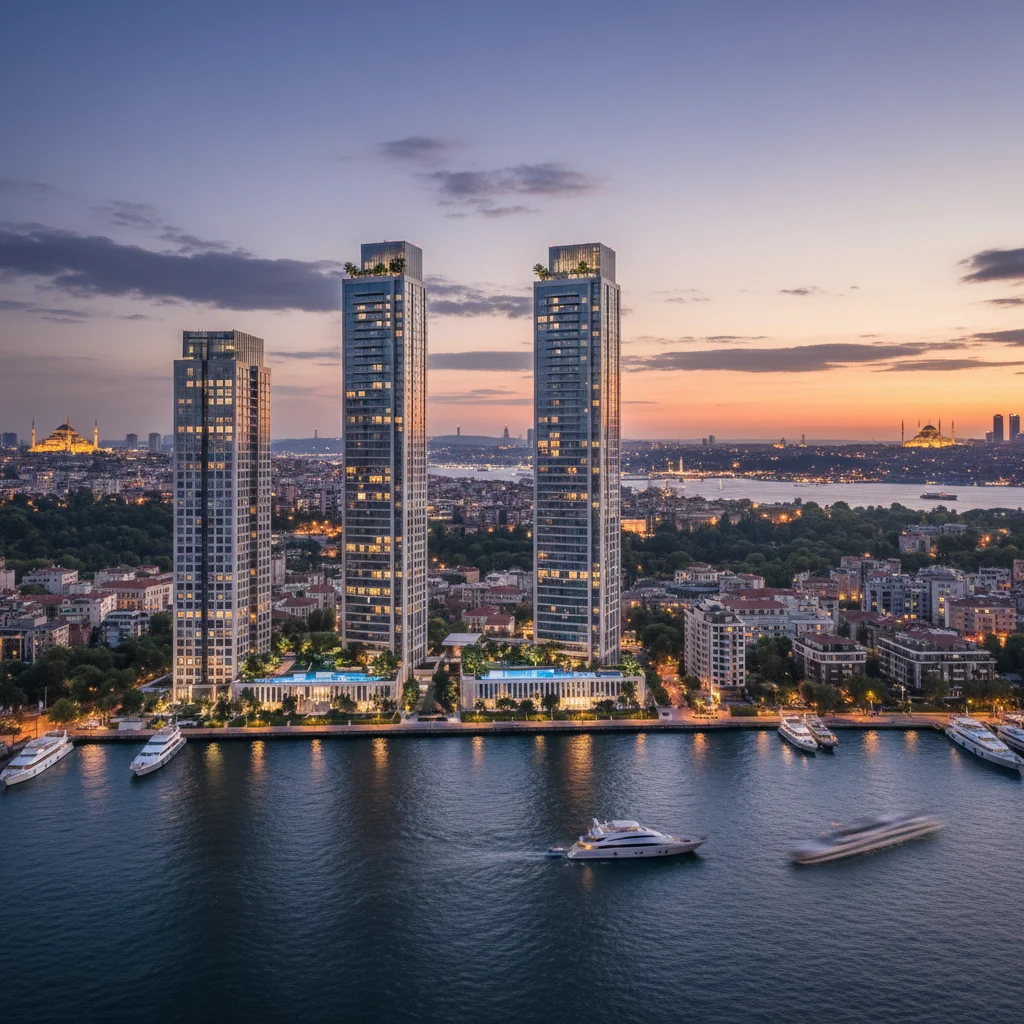
Too many buyers treat the $400,000 threshold purely as a passport fee and rush into overpriced developments designed solely for foreign applicants. A disciplined investor treats citizenship as a bonus on top of a fundamentally sound real estate acquisition. Analyzing micro-locations, build quality, developer track records, and exit liquidity ensures your capital works hard throughout the three-year lock-in period and beyond.
Real estate dynamics vary dramatically across Turkey. Selecting the right city depends on whether you prioritize steady corporate rental income, coastal holiday lifestyle, or long-term infrastructure-driven appreciation.
Istanbul remains the primary destination for citizenship buyers due to deep liquidity, massive tenant demand, and international connectivity. However, neighborhood selection makes all the difference:
For buyers seeking a vacation home or strong seasonal tourism demand, Antalya (including Lara, Konyaalti, and Alanya) offers resort-style residential complexes, mild winters, and an established expatriate community. Note that certain coastal neighborhoods in Turkey have neighborhood-level residency quota restrictions for standard residence permits, though citizenship-eligible property investments operate under separate rules. Always verify local zoning and tourism rental licensing before banking on short-term holiday lets.
Ankara provides remarkably stable, recession-resistant residential and commercial real estate anchored by government ministries, embassies, and major universities. Bursa appeals to buyers looking for greenery, industrial growth, proximity to Istanbul via highway and ferry, and larger luxury villas at competitive square-meter prices.
Both completed properties with ready Title Deeds and off-plan projects can qualify for Turkish citizenship, provided they meet specific legal structures:
You do not have to put all $400,000 into a single luxury apartment. Turkish regulations allow investors to combine multiple properties—for example, two $210,000 one-bedroom apartments or a commercial shop paired with a residential flat—to cross the $400,000 threshold. Splitting your investment across two smaller units in high-demand neighborhoods can diversify tenant risk and make future resale easier, as domestic Turkish buyers frequently shop in the $150,000 to $250,000 bracket.
| City / Region | Primary Investor Profile | Typical Rental Demand | Exit Liquidity to Locals |
|---|---|---|---|
| Central Istanbul (European Side) | Yield & Appreciation Focused | Corporate, Expats, Students | Very High |
| Asian Side Istanbul (Kadikoy / Atasehir) | Wealth Preservation & Family | High-Income Professionals | Very High |
| Antalya Coast | Lifestyle & Seasonal Income | Tourists & Long-Stay Expats | Moderate to High |
| Ankara | Conservative Income Seekers | Diplomats, Civil Servants | High |
| Bodrum / Fethiye | Ultra-Prime Luxury & Villa | High-End Summer Vacationers | Moderate (Seasonal) |
A well-coordinated acquisition and naturalization timeline typically spans four to six months from initial property selection to passport issuance. Working with an independent real estate attorney alongside a licensed brokerage streamlines every stage, especially if you execute parts of the process via Power of Attorney from abroad.
Looking for the best real estate investment opportunity in Istanbul?
We help you choose the right property based on your budget and goals
Get a Free Consultation
Budgeting accurately prevents last-minute liquidity surprises at the Land Registry. Beyond the $400,000 property price itself, foreign buyers must account for closing taxes, official fees, and legal expenses. Note that while statutory Title Deed transfer tax is officially 4% (historically split 2% buyer and 2% seller, though in practice buyers frequently negotiate or absorb the full 4% depending on market conditions), VAT exemptions exist for specific first-hand purchases.
Under Turkish VAT law, foreign non-residents buying brand-new residential or commercial units directly from a licensed construction company may qualify for a VAT exemption (KDV İstisnası)—saving 1%, 10%, or 20% depending on property classification—provided payment enters Turkey in foreign currency and the property is held for at least one year (already covered by the three-year citizenship rule).
| Expense Item | Estimated Cost (2026) | Notes |
|---|---|---|
| Title Deed Transfer Fee (Tapu Harcı) | 4% of declared value | Calculated on declared Tapu price; confirm buyer/seller split in contract |
| SPK Valuation Report | $400 – $700 | Paid to official appraisal system prior to Tapu |
| DASK Earthquake Insurance | $50 – $150 / year | Mandatory for title transfer and utility activation |
| Sworn Translation & Notary Fees | $800 – $1,500 | Depends on number of family members and Power of Attorney |
| Independent Legal Counsel | $3,500 – $7,000 | Covers due diligence, contracts, residency, and citizenship filing |
| Residency & Citizenship Application Fees | $400 – $800 per person | Includes state card fees, health insurance for residency, passport issuance |
Because you must hold your Turkish real estate for at least 36 months, maximizing net yield while protecting the physical condition of the asset becomes a key financial priority. Leaving an apartment empty for three years costs you annual site maintenance fees (Aidat), municipal property taxes, and foregone rental revenue.
Regulatory rules for short-term rentals in Turkey changed significantly with the implementation of Law No. 7464 on Tourism Purpose Rentals. In 2026, homeowners cannot simply list an apartment on short-term platforms without obtaining a formal Tourism Rental Permit from the Ministry of Culture and Tourism—which typically requires unanimous written consent from all unit owners in an apartment building.
For most international citizenship investors, annual long-term residential or corporate leases represent the smoother, legally compliant route. Under Turkish tenancy law, standard residential lease agreements allow annual rent adjustments capped by the 12-month average Consumer Price Index (CPI), keeping rental yields responsive to inflation while delivering steady monthly cash flow.
If you live outside Turkey, self-managing tenants across time zones and language barriers quickly becomes exhausting. Partnering with an experienced local property management agency helps preserve your asset value through:
Planning your exit before you even buy is the hallmark of an experienced real estate investor. Properties priced wildly above local market norms exclusively to hit $400,000 often suffer sharp discounts when sold to domestic Turkish buyers three years later. By purchasing properties in liquid, domestically popular districts at true market price per square meter, you preserve the option to either keep collecting strong rental yields indefinitely or sell smoothly in Turkish Lira or foreign currency once the three-year Tapu restriction is lifted.
Even well-intentioned investors encounter costly delays when relying on unverified intermediaries or skipping legal verification. Watch closely for these recurring traps:
Yes. Residential apartments, villas, commercial offices, retail shops, and zoned land can qualify toward the $400,000 minimum threshold. However, purchasing unbuilt agricultural land carries additional restrictions and requires presenting an approved development project within two years. Most foreign investors prefer completed residential or commercial units with clear rental track records.
No. Turkey imposes zero physical residency requirements before applying, during processing, or after you receive your passport. There is also no Turkish language proficiency test or cultural exam required for citizenship by real estate investment.
No. Only your own unencumbered equity counts toward the $400,000 requirement. If you buy a $600,000 property using a $200,000 bank mortgage and $400,000 in cash equity transferred with a DAB, the equity portion can qualify—provided the mortgage structure is explicitly approved—but you cannot borrow the core $400,000 threshold.
Assuming your civil documents are legalized and ready in advance, securing the valuation report, transferring funds, completing the Tapu, and obtaining the Certificate of Conformity typically takes 3 to 5 weeks. Residency permit issuance and final security clearance for citizenship approval generally take another 3 to 5 months, putting the realistic end-to-end timeline at roughly 4 to 6 months.
Yes. Turkey fully permits dual and multiple citizenship and does not require you to renounce your existing nationality. However, you should verify whether your home country imposes any restrictions on acquiring a second passport before submitting your application.
Securing Turkish citizenship through real estate in 2026 remains an attractive, asset-backed pathway when approached with disciplined due diligence and sound property selection. By prioritizing prime locations, adhering strictly to Central Bank DAB rules, and partnering with qualified legal and property management specialists, you can safeguard your capital while unlocking lifelong global flexibility for your family.
Note: Information in this article was sourced and verified with reference to leading Turkish property and citizenship resources: Emlak Platform, Mbany Real Estate, and Massar Istanbul.