US Dollar - USD
- Turkish Lira - TRY
- US Dollar - USD
- Euro - EUR
- Pound sterling - GBP
- Russian Ruble - RUB
- Chinese Yuan - CNY
- Georgian lari - GEL
- Saudi Riyal - SAR
- UAE Dirham - AED
- Syrian Pound - SYP
Turkey continues to stand out in 2026 as one of the most dynamic crossroads for global capital, lifestyle relocation, and second-passport planning. Bridging Europe and Asia, the country offers a rare combination: a deep, liquid real estate market, strong tourism-driven rental demand, and one of the fastest citizenship-by-investment programs available among major G20 economies. For international buyers and families exploring how to obtain Turkish citizenship, understanding the exact legal mechanics—not just the headline threshold—is what separates a smooth approval from costly delays.
Whether your goal is acquiring a second passport for global mobility, securing a strategic residence base in Istanbul or along the Mediterranean coast, or building a euro- and dollar-linked property portfolio, Turkish citizenship law provides clear, structured routes. Below is an end-to-end breakdown of eligibility rules, property selection criteria, transaction steps, residency bridges, and post-purchase property management in 2026.
The Turkish Citizenship by Investment (CBI) program, governed under the Regulation on the Implementation of the Turkish Citizenship Law, allows foreign nationals to acquire full citizenship alongside their spouse and dependent children under the age of 18 without mandatory language exams or long-term physical residency requirements.
While several financial pathways exist, real estate remains the overwhelming favorite among international applicants. Unlike passive capital deposits, residential and commercial properties generate ongoing rental income, serve as personal residences, and can be liquidated after the mandatory holding period without revoking citizenship.
To qualify for citizenship via property purchase in 2026, an investor must acquire one or multiple properties with a combined official valuation of at least $400,000 USD (or the equivalent in approved foreign currency). Several strict regulatory rules govern how this threshold is calculated:
Although real estate dominates the program, applicants who prefer financial instruments or business expansion can qualify through other regulated channels:
| Investment Pathway | Minimum Threshold (2026) | Holding / Lock-In Period | Eligible Family Members | Key Compliance Requirement |
|---|---|---|---|---|
| Real Estate Acquisition | $400,000 USD | 3 Years | Spouse & children under 18 | SPK valuation, DAB certificate, Tapu no-sale pledge |
| Bank Deposit | $500,000 USD | 3 Years | Spouse & children under 18 | Held in a Turkish bank under YUVAM/approved FX rules |
| Fixed Capital Investment | $500,000 USD | 3 Years | Spouse & children under 18 | Verified by Ministry of Industry and Technology |
| Government Bonds / Sukuk | $500,000 USD | 3 Years | Spouse & children under 18 | Blocked in custody via Ministry of Treasury and Finance |
| REIF / Venture Capital Fund | $500,000 USD | 3 Years | Spouse & children under 18 | Licensed Turkish real estate or venture capital fund shares |
| Employment Creation | 50 Turkish Employees | 3 Years | Spouse & children under 18 | Verified by Ministry of Labor and Social Security |
Not every foreign buyer enters the Turkish property market aiming for immediate naturalization. Many begin with a residence permit (İkamet) before scaling up their portfolio, while others use residency purely as a transitional step during citizenship processing.
Foreigners who buy residential real estate below the $400,000 citizenship threshold can apply for a renewable short-term property residence permit. Under current rules implemented across Turkey, residential properties purchased specifically for residency permits must meet a minimum appraisal value of $200,000 USD nationwide and must be located in neighborhoods that remain open to foreign registration (excluding certain high-density districts capped by the Presidency of Migration Management).
Property residency grants legal stay, access to local banking, healthcare enrollment options, and schooling for children, but it does not confer automatic citizenship or visa-free travel rights associated with a Turkish passport.
Foreign residents who live continuously in Turkey on eligible residence permits for five consecutive years—with total absences generally not exceeding 365 days over the five-year span—may apply for general naturalization. Unlike the CBI pathway, general naturalization requires demonstrating sufficient Turkish language proficiency, stable local income, and deeper integration interviews. Similarly, holding valid residency uninterruptedly for eight years opens eligibility for an indefinite long-term residence permit.
Even within the $400,000 citizenship-by-investment route, securing an investor residence permit under Article 31/1(j) of Law No. 6458 is a mandatory procedural bridge. Once the Certificate of Conformity is issued, the main applicant obtains this expedited investor residency before submitting the final citizenship dossier. In practice, this allows investors and their families to reside legally in Turkey immediately while passport approvals are finalized.
Looking for the best real estate investment opportunity in Istanbul?
We help you choose the right property based on your budget and goals
Get a Free Consultation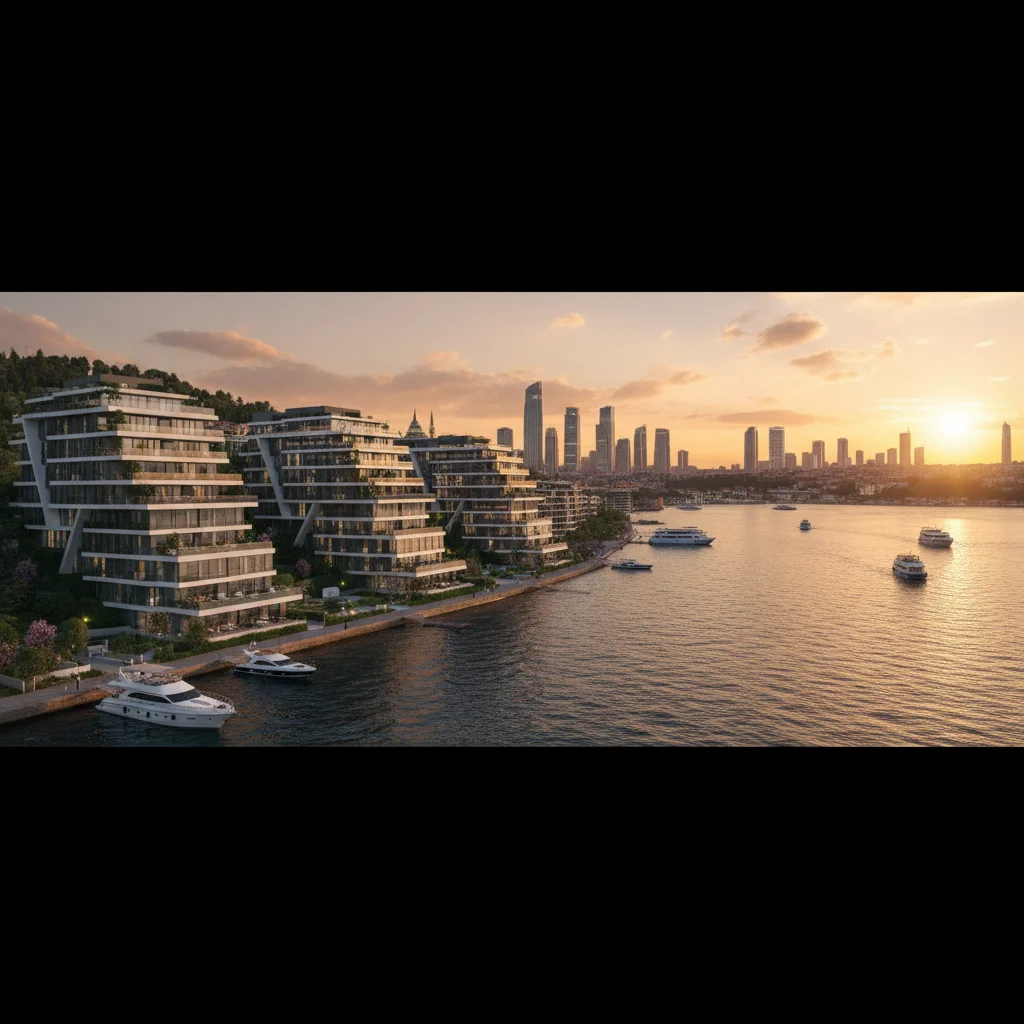
Executing a citizenship-qualifying property purchase in Turkey requires tight coordination between your real estate advisor, independent lawyer, licensed appraiser, and the General Directorate of Land Registry and Cadastre (TKGM). Following the exact sequence prevents currency conversion mismatches or rejected title deed annotations.
Before signing binding reservation contracts or transferring capital, every foreign buyer must obtain a Turkish Tax Identification Number (Vergi Numarası). This can be generated quickly online via the Interactive Tax Office or in person with a passport. With your tax number in hand, you or your legal representative (acting under a notarized and apostilled Power of Attorney) can open a local Turkish bank account to handle purchase funds, utility setups, and future rental deposits.
Before paying a deposit, conduct independent legal due diligence on the asset. A specialized real estate attorney should pull an official registry extract from the Land Registry to verify ownership chain, encumbrances, and zoning compliance.
Two critical financial compliance documents anchor every Turkish citizenship real estate file:
At the Land Registry appointment—attended by the buyer (or attorney), seller, and a sworn translator if the buyer does not speak Turkish—ownership is officially transferred. Alongside the Tapu transfer, a formal declaration is entered on the registry record restricting sale for three years. In 2026, title deed transfer tax remains 4% of the declared value (customarily negotiated between buyer and seller, though legally split 2% each unless contractually agreed otherwise).
Once the Tapu and payment receipts are uploaded, the Land Registry issues the Certificate of Conformity (Uygunluk Belgesi), confirming the investment meets all citizenship thresholds. Your legal team then completes two final filings:
Standard processing from complete dossier submission to presidential decree approval typically takes between four and eight months, after which biometrics are captured for Turkish national ID cards and passports—either inside Turkey or at a Turkish Embassy abroad.
Choosing the right asset determines both your long-term capital preservation and your annual rental return during the three-year hold. Rather than chasing inflated "citizenship-packaged" developments, savvy investors benchmark price per square meter against local Turkish resale comparables.
Istanbul remains the primary engine of Turkish real estate liquidity. On the European Side, central districts such as Şişli, Beşiktaş, Kağıthane, and Zeytinburnu attract corporate tenants, university faculty, and medical tourism visitors, while growth corridors like Başakşehir and Bahçeşehir appeal to larger families seeking gated compound amenities. On the Asian Side, Kadıköy, Ataşehir (home to the Istanbul Financial Center), and Üsküdar command resilient local end-user demand, providing stronger downside protection when exiting after year three.
Antalya—spanning Konyaaltı, Lara, and Belek—continues to draw European and Middle Eastern buyers seeking sun, golf, and year-round hospitality infrastructure. Meanwhile, Bodrum on the Aegean coast operates as a prime luxury second-home market with high seasonal villa rates and dollar-denominated pricing power in premium marinas like Yalıkavak.
Often overlooked by overseas tourists, Ankara offers remarkably steady institutional and diplomatic tenant demand, lower entry prices per square meter, and predictable long-term leases. Commercial offices, high-street retail units with corporate tenants, and logistics-adjacent spaces in Istanbul, Izmir, and Ankara have also gained traction among yield-focused citizenship buyers.
| City / Region | Prime Target Districts | Primary Asset Focus | Typical Gross Rental Yield | Exit Liquidity Profile |
|---|---|---|---|---|
| Istanbul (European) | Şişli, Beşiktaş, Kağıthane, Zeytinburnu | Branded residences, urban apartments, offices | 5.0% – 7.5% | Very High (local & international buyers) |
| Istanbul (Asian) | Kadıköy, Ataşehir, Üsküdar | Family compounds, financial-district units | 4.5% – 6.5% | Very High (strong domestic demand) |
| Antalya | Konyaaltı, Lara, Döşemealtı | Resort apartments, gated villas | 5.5% – 8.0% | High (tourism & relocation buyers) |
| Bodrum (Muğla) | Yalıkavak, Türkbükü, Gümüşlük | Luxury coastal villas | 4.5% – 7.0% (seasonal) | Moderate-High (niche luxury segment) |
| Ankara | Çankaya, Çayyolu, Oran | Diplomatic residences, commercial suites | 6.0% – 8.0% | High (steady local workforce market) |
Looking for the best real estate investment opportunity in Istanbul?
We help you choose the right property based on your budget and goals
Get a Free Consultation
Once your title deed is registered and your citizenship file is underway, your focus shifts to asset performance. Passive oversight from abroad can erode returns if local tenancy laws, building dues (aidat), and municipal permits are neglected.
Turkey strictly regulates short-term holiday rentals (leases under 100 days at a time) under Tourism Purpose Rental Legislation (Law No. 7464). Property owners wishing to list units on short-stay platforms must obtain a formal Tourism Residence Permit plaque from the Ministry of Culture and Tourism—which generally requires unanimous written consent from all apartment owners in the residential building unless the property is a detached villa or a licensed residence-hotel concept.
For investors in standard residential towers, long-term residential leases (one year or more) or corporate tenancies are typically cleaner and fully compliant. Under Turkish Code of Obligations rules, landlords should draft watertight bilingual contracts, collect security deposits properly, and use notarized eviction undertakings (tahliye taahhütnamesi) where advised by legal counsel.
For overseas owners, partnering with an experienced local property management team removes day-to-day friction. A comprehensive management service handles:
Owning property in Turkey entails straightforward, predictable fiscal responsibilities:
One of the major strengths of Turkish citizenship law is its liberal stance on dual nationality. Turkey does not require newly naturalized citizens to renounce their original passport, provided your home country also permits dual citizenship.
A single $400,000 real estate portfolio covers the primary investor, one legal spouse, and all unmarried dependent children under 18 at the time of application. Once granted, citizenship is permanent and hereditary—future children born after naturalization acquire Turkish citizenship automatically. Adult children aged 18 or older generally must qualify independently, unless medically dependent and unable to care for themselves under strict legal documentation.
Exactly three years after the Tapu annotation date, the investor may apply to the Land Registry to lift the no-sale restriction. Once removed, you are free to sell the property to either a Turkish national or another foreign buyer (noting that a subsequent foreign buyer cannot use that exact same property for a second citizenship claim) and repatriate your sale proceeds freely through the banking system. Crucially, selling the property after year three has zero impact on your citizenship status—your Turkish passport and your family's citizenship remain permanent for life.
Yes, provided the project meets strict legal criteria—either holding a valid construction servitude title (Kat İrtifakı) or a notarized preliminary sales contract registered at the Land Registry with the full $400,000 value paid via DAB-certified bank transfers and supported by an SPK appraisal confirming completion value standards.
No. Unlike traditional residency-based naturalization programs, Turkish Citizenship by Investment imposes zero minimum stay requirements either before or after passport issuance.
Foreigners who do not reside in Turkey and purchase a brand-new residential or commercial unit directly from the developer in foreign currency brought from abroad may qualify for a VAT exemption (typically 1% to 20% depending on property class) under Article 13/i of the VAT Law, provided the property is held for at least three years.
Because the DAB certificate locks in the USD equivalent on the exact day foreign currency is converted through the Turkish bank, timing your transfer alongside your SPK valuation ensures your file remains safely above the $400,000 threshold regardless of short-term exchange movements.
Obtaining Turkish citizenship through real estate in 2026 remains a strategic, asset-backed pathway that pairs personal mobility with tangible property ownership. By anchoring your purchase in thorough legal due diligence, verifying SPK valuations and Central Bank currency certificates, selecting liquid neighborhoods, and implementing disciplined property management, you protect both your capital and your family's long-term residency and citizenship goals.
Note: The regulatory insights and real estate investment information in this article were sourced from Emlak Platform, Mbany Real Estate, and Massar Istanbul.