US Dollar - USD
- Turkish Lira - TRY
- US Dollar - USD
- Euro - EUR
- Pound sterling - GBP
- Russian Ruble - RUB
- Chinese Yuan - CNY
- Georgian lari - GEL
- Saudi Riyal - SAR
- UAE Dirham - AED
- Syrian Pound - SYP
For international buyers who want space, privacy, and greenery without paying Istanbul or Bodrum premiums, Bursa has become one of Turkey's most practical real estate markets in 2026. Located across the Sea of Marmara from Istanbul and anchored by the slopes of Mount Uludag, Turkey's fourth-largest city combines industrial employment, strong domestic housing demand, and a cooler, greener lifestyle. While coastal mega-cities continue to price out mid-budget buyers, cheap villas in Bursa still offer private gardens, multiple bedrooms, and residential compound security at prices closer to a standard city-center apartment elsewhere.
Understanding what "cheap" or "affordable" means in Bursa requires looking closely at property types. In 2026, budget-friendly villas in the province generally fall into three categories: semi-detached twin villas inside newly built suburban compounds, compact three-bedroom townhouses in emerging commuter districts, and older standalone houses on larger agricultural or village-edge plots. Buyers who look beyond the luxury mansions of Bademli quickly discover well-built family homes at entry points that make sense for both personal relocation and long-term rental yield.
Accessibility has also reshaped demand. With high-speed ferry crossings between Mudanya and central Istanbul and the highway connection across the Osmangazi Bridge, commuting or managing a second home from Istanbul takes roughly 90 minutes to two hours. That connectivity keeps resale liquidity healthy, because any villa priced sensibly in Bursa appeals not only to foreign buyers, but also to local Turkish executives, university staff, and retirees leaving denser metropolitan neighborhoods.
Bursa stretches from forested mountain foothills in the south and east to fertile plains and Marmara beaches in the north and west. Villa prices shift dramatically depending on elevation, proximity to metro lines, and neighborhood maturity. Focusing on emerging residential corridors rather than saturated prestige enclaves is the most reliable way to secure value in 2026.
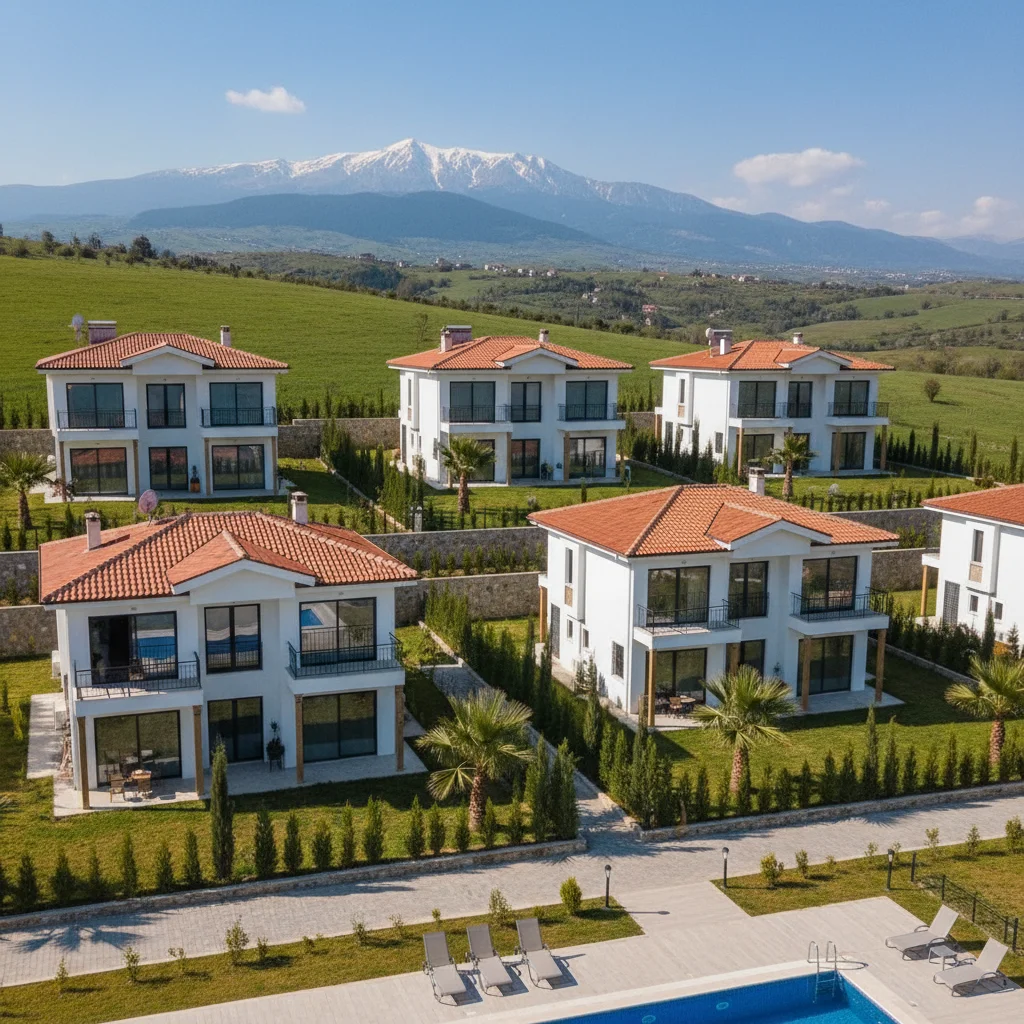
Located on the eastern side of the city, Kestel and neighboring Gursu remain among the most cost-effective areas for modern villa construction. Land prices here are substantially lower than in western Bursa, allowing developers to build twin villas and small gated estates with shared gardens, parking, and security at modest asking prices. Kestel benefits from direct light-rail access into central Bursa, meaning residents do not feel isolated despite living near orchards and mountain streams.
Buyers exploring Kestel should examine elevation and soil reports carefully. Hillside streets offer sweeping valley views and fresh summer breezes, while lower flats near the main Ankara highway provide faster commuting. For families seeking four-bedroom layouts on a tight budget, Kestel consistently delivers more interior square footage per dollar than almost any other central district.
Nilufer is widely regarded as Bursa's cleanest, best-planned modern municipality, anchored by wide boulevards, private hospitals, and Uludag University. While central Nilufer and upscale Bademli command steep prices, the western expansion corridor—covering Kayapa, Hasanaga, and parts of Gorukle—offers realistic entry points for mid-market villa buyers in 2026. Developers have concentrated heavily on low-rise residential zones here, creating contemporary townhouse compounds aimed at young professionals and engineering families.
Kayapa stands out for buyers prioritizing new earthquake-compliant engineering and quiet pine-lined surroundings. Because infrastructure is still expanding outward, early buyers often capture capital appreciation as supermarkets, international-curriculum schools, and transit extensions follow new housing stock.
Everyone knows Mudanya for its historic waterfront and summer ferries, which pushes beachfront home values higher. However, moving five to ten minutes inland from the Mudanya coast—or shifting east along the bay toward Gemlik and Kumla—unlocks noticeably cheaper detached and semi-detached villas. Gemlik sits inside a sheltered gulf famous for olive groves and calmer coastal living, offering older two-story villas and modest new projects at discounts compared to Mudanya's premier neighborhoods.
Coastal microclimates require extra attention to building insulation and winter heating systems. Even so, buyers looking for a holiday base that also attracts summer domestic tenants find strong occupancy between June and September in the Gemlik-Mudanya belt.
Osmangazi forms the historic and commercial heart of Bursa, yet its northern edges behave like distinct suburban towns. Demirtas has expanded rapidly due to its proximity to organized industrial zones, while hillside villages like Gundogdu provide panoramic views over the Bursa plain toward Mount Uludag. Villas in these pockets are typically older standalone properties or small boutique clusters built for multi-generational living.
For investors prioritizing steady tenant demand over resort aesthetics, Demirtas offers reliable year-round leasing thanks to nearby factories, logistics hubs, and white-collar managers working in northern Bursa.
| District or Area | Typical Affordable Villa Style | 2026 Estimated Price Range (USD) | Primary Advantage | Best Suited Buyer Profile |
|---|---|---|---|---|
| Kestel and Gursu | Twin villas and compact gated compounds | $135,000 – $220,000 | Lowest price per square meter with rail access | Budget-conscious families and long-term yield seekers |
| Kayapa and Hasanaga (Nilufer) | Modern low-rise townhouses and duplex villas | $180,000 – $290,000 | New building codes and strong urban planning | Relocating professionals and capital-growth investors |
| Gemlik and Inland Mudanya | Two-story coastal-edge detached homes | $150,000 – $260,000 | Sea access and high summer rental appeal | Holiday-home owners and seasonal rental operators |
| Demirtas and Gundogdu (Osmangazi) | Standalone suburban and hillside villas | $140,000 – $235,000 | Proximity to major employment hubs | Long-term corporate landlords and large households |
Looking for the best real estate investment opportunity in Istanbul?
We help you choose the right property based on your budget and goals
Get a Free Consultation
Two villas with identical bedroom counts in Bursa can differ in price by more than 40 percent. Understanding why those gaps exist helps buyers avoid overpaying for cosmetic finishes while spotting genuine bargains that need only minor updates.
First, compound status changes both upfront cost and ongoing lifestyle. A standalone village-edge villa with no shared facilities usually carries a lower asking price and zero monthly compound fees, yet the owner bears full responsibility for perimeter security, garden maintenance, and exterior repairs. Conversely, gated residential estates add 24-hour security, shared pools, playgrounds, and snow-clearing services, which raise the purchase price slightly but simplify remote ownership.
Second, construction year matters enormously in Turkey. Properties completed after the updated 2018 national seismic building regulations feature stricter concrete grading, soil testing, and structural steel standards. An older villa from the early 2000s may look inexpensive at first glance, but smart buyers factor in engineering inspections and potential retrofitting or thermal insulation upgrades before signing a contract.
Third, land zoning and legal completion status heavily influence valuation. Fully zoned residential plots with a finalized habitation certificate trade at higher values—and qualify smoothly for bank transfers, utility subscriptions, and residency applications—compared to semi-rural properties lacking full municipal sign-off.
When budgeting for cheap villas in Bursa in 2026, setting aside an extra 6 to 8 percent above the agreed purchase price protects buyers from last-minute liquidity surprises at closing. Typical transaction expenses include:
One of the biggest mistakes international buyers make in 2026 is assuming that purchasing any residential property in Turkey automatically unlocks a residence permit. Clear planning around statutory thresholds prevents costly disappointment after closing.
Under Turkey's property-based residence permit framework, a single residential property must have an officially appraised and declared title deed value of at least $200,000 USD to support a real estate residence permit application. Equally important, the neighborhood where the villa sits must be open to new foreign residency registrations, as certain high-density districts remain closed under national population caps.
This creates an important strategic fork for buyers looking at cheap villas in Bursa. If a villa costs $145,000 in Kestel or Gemlik, it remains a completely legal asset to own, rent out, use for 90-day visa-free or tourist stays, and sell for profit—but it will not qualify by itself for a property-ownership residence permit. Buyers who specifically need long-term Turkish residency through their purchase should target the $200,000-plus tier in open neighborhoods across Nilufer, Mudanya, or Kestel and confirm neighborhood eligibility with immigration counsel before paying a deposit.
Turkish Citizenship by Investment remains set at a minimum real estate commitment of $400,000 USD, paired with a three-year non-sale annotation on the title deed. Notably, the law allows investors to combine two or more properties to reach the $400,000 total, provided all purchases meet valuation and foreign-currency transfer rules.
For yield-focused investors, Bursa makes this multi-unit approach uniquely attractive. Instead of tying $400,000 into a single one-bedroom apartment in central Istanbul, an investor can purchase two modern $200,000 villas in Nilufer or Kestel—living in one while leasing the other, or renting both out to diversify tenant risk. After the three-year holding period expires, the investor can liquidate one villa to recover capital while retaining the second asset indefinitely.
Looking for the best real estate investment opportunity in Istanbul?
We help you choose the right property based on your budget and goals
Get a Free Consultation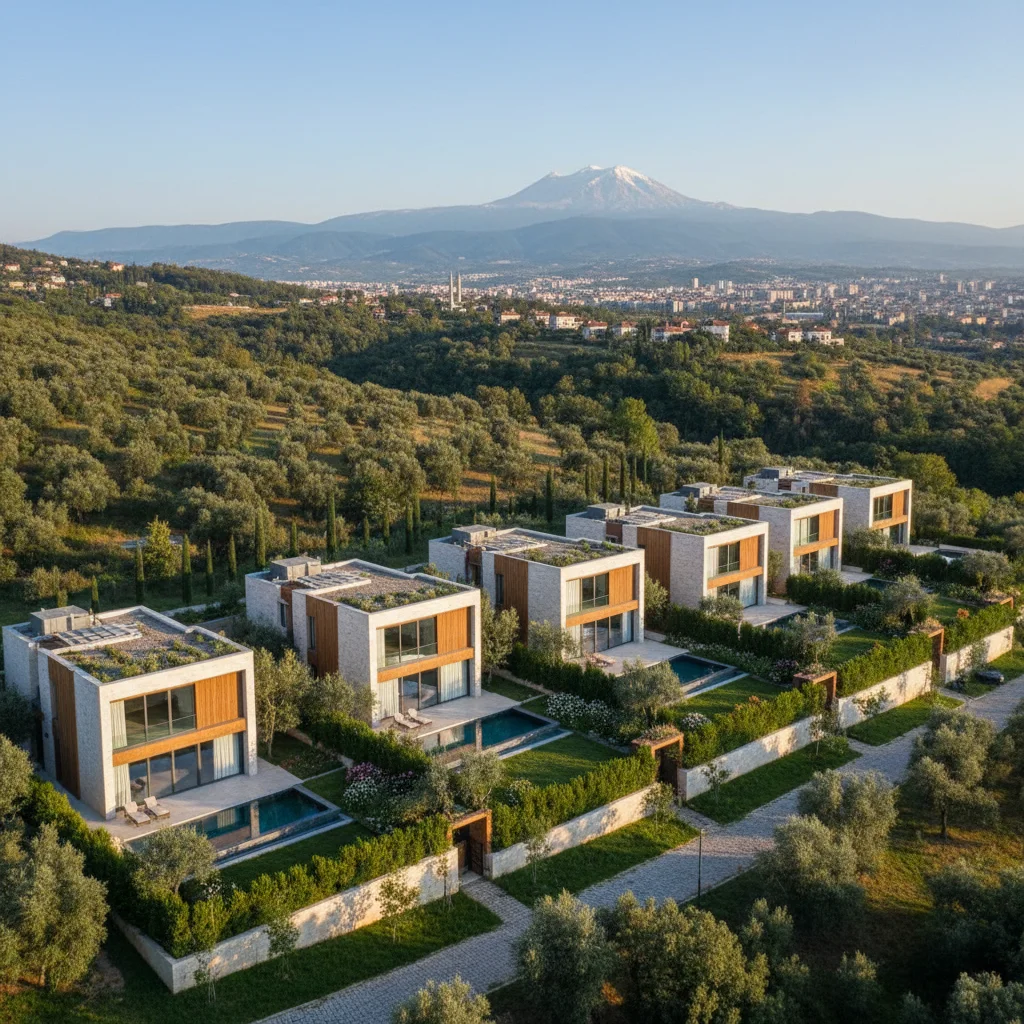
Turkey's property registration system is centralized, fast, and transparent when buyers follow standard legal steps in the proper order. Most clean cash transactions in Bursa conclude within five to ten business days once documents are ready.
Never hand over a cash reservation deposit on an informal handshake. Before wiring earnest money, confirm these four essentials in writing:
Buying an affordable villa is only half of the financial equation; managing ongoing occupancy, upkeep, and seasonal weather protects long-term returns. In 2026, well-located cheap villas in Bursa typically deliver gross annual rental yields between 5.5 percent and 8 percent, depending on purchase price, furnishing quality, and tenant strategy.
Two distinct rental models perform well in Bursa. The first is steady 12-month unfurnished or semi-furnished leasing to Turkish white-collar families, automotive engineers, and academic staff—especially in Nilufer, Osmangazi, and Kestel. Long-term leases minimize vacancy gaps and reduce wear and tear, while tenants generally cover routine utility bills and monthly compound dues directly.
The second model focuses on furnished seasonal or medium-term stays. Bursa remains a favorite cool-weather escape for domestic travelers from Istanbul and family visitors from Gulf countries during summer months, alongside winter ski visitors heading up Mount Uludag. Furnished villas with private gardens in green districts like Mudanya, inland Kestel, or mountain-facing Osmangazi command premium summer weekly or monthly rates, provided short-term tourism licensing rules are observed strictly.
Foreign owners living outside Turkey rarely want to coordinate plumbers, garden trimming, or boiler servicing across time zones. Fortunately, Bursa's maturing real estate sector offers structured property management services tailored to overseas landlords.
While Turkish banks technically offer mortgages to foreign buyers, high domestic interest rates and conservative loan-to-value caps mean most international buyers use cash or developer installment plans instead. Several mid-sized builders in Kestel and Kayapa still offer interest-free structured payment plans over 12 to 24 months during construction, typically requiring a 40 to 50 percent down payment.
Safety depends on construction date, soil classification, and municipal inspection rather than price alone. Buyers should prioritize villas built after 2018 under modern seismic engineering codes, verify the full habitation certificate, and avoid unpermitted hillside extensions regardless of how low the asking price appears.
For hands-off foreign investors, a newer twin villa inside a managed compound usually wins. You gain modern insulation, shared security, easier tenant appeal, and predictable resale value. Older standalone villas only make stronger financial sense if you live locally, enjoy hands-on renovation projects, and secure a generous land plot at a deep discount.
Affordable family villas priced under $250,000 sit squarely in the sweet spot of local Turkish middle-class demand as well as international demand. Unlike ultra-luxury estates that can take a year or more to match with a niche buyer, sensibly priced three- and four-bedroom villas in connected districts like Nilufer, Kestel, and Mudanya enjoy strong liquidity whenever priced accurately against local market appraisals.
Note: Market insights, pricing benchmarks, and regulatory guidance in this article were sourced from Emlak Platform, Mbany Real Estate, and Massar Istanbul.