US Dollar - USD
- Turkish Lira - TRY
- US Dollar - USD
- Euro - EUR
- Pound sterling - GBP
- Russian Ruble - RUB
- Chinese Yuan - CNY
- Georgian lari - GEL
- Saudi Riyal - SAR
- UAE Dirham - AED
- Syrian Pound - SYP
Istanbul remains one of the world's most captivating real estate frontiers, seamlessly spanning two continents while commanding geopolitical, economic, and cultural significance. As of 2026, the metropolis has transformed into a sophisticated, multi-polar property market. Driven by sweeping urban regeneration initiatives, expanded high-speed metro lines, and the ongoing maturation of mega-infrastructure projects—such as the Istanbul Airport logistics corridor and the Istanbul International Financial Centre (IIFC)—the city offers an extraordinary spectrum of residential and commercial property opportunities.
For international property buyers, selecting the right district requires navigating dual objectives: capital preservation and robust investment yield. The Turkish real estate sector has evolved past speculative buying into a mature asset class that rewards strategic location choices. Whether an investor aims to acquire a prime Bosphorus residence, generate steady commercial rental yields, secure a second home, or qualify for the Turkish Citizenship by Investment (CBI) program, Istanbul presents bespoke micro-markets tailored to every financial profile.
To identify the top areas to purchase real estate, one must first grasp the macro-dynamics that influence valuations, rental yields, and liquidity across Istanbul's 39 official municipal districts.
Looking for the best real estate investment opportunity in Istanbul?
We help you choose the right property based on your budget and goals
Get a Free ConsultationPrime central districts represent the pinnacle of Istanbul real estate. These neighborhoods feature limited land supply, preserved architectural heritage, and an affluent demographic base that insulates property values from broader economic volatility.
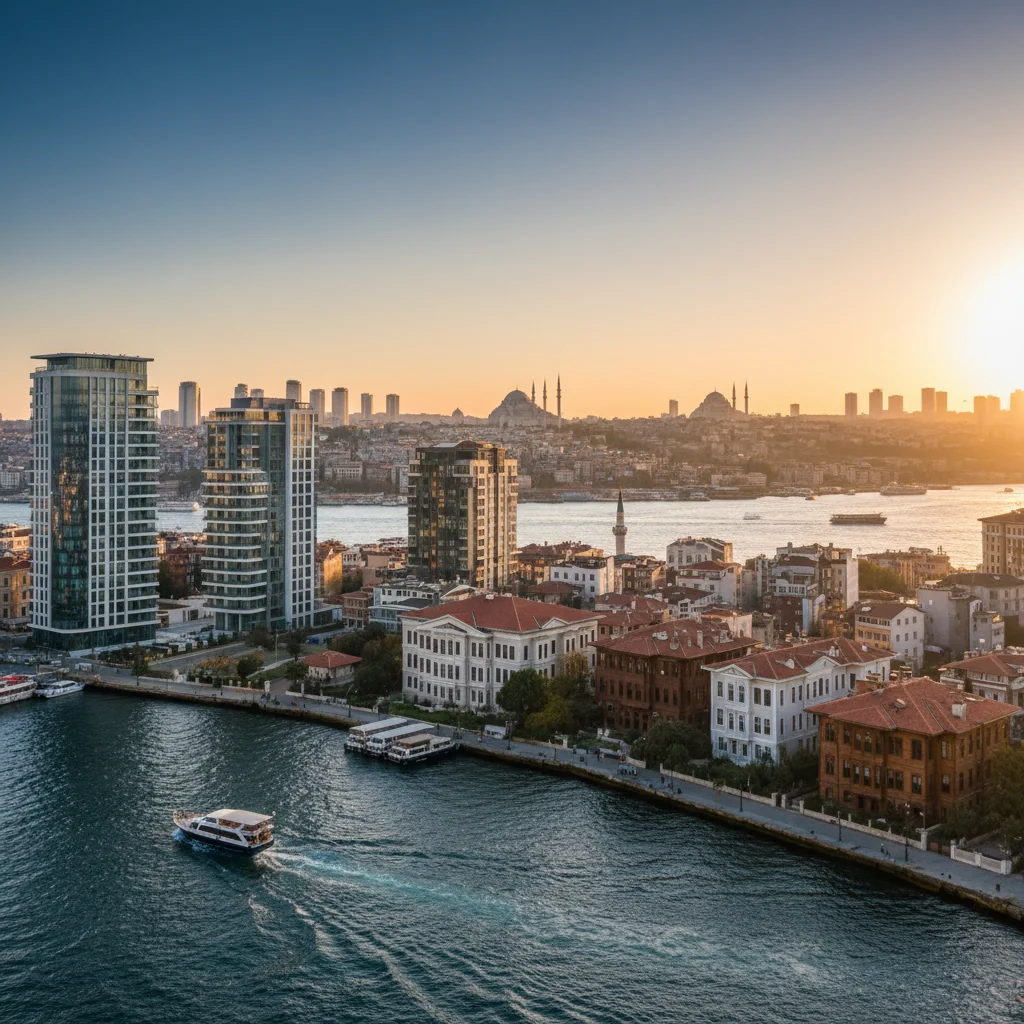
Beşiktaş forms the historic and financial spine of the European shoreline along the Bosphorus. Neighborhoods such as Bebek, Kuruçeşme, and Arnavutköy offer rare waterfront mansions (yalı) and boutique low-rise apartments that represent Istanbul's most prestigious postal codes.
Extending from the northern financial artery of Maslak to the forested coast of the Black Sea, Sarıyer is widely considered the green capital of luxury residential living. The Cendere Valley axis, particularly Vadistanbul, has become the premier choice for corporate executives due to its master-planned master developments, open-air luxury shopping avenues, and direct forest interfaces.
Şişli functions as the cultural and fashion nexus of Istanbul. While historic Nişantaşı offers tree-lined avenues anchored by international luxury fashion houses, adjacent Bomonti has completed its transformation into a high-rise urban lifestyle hub populated by creative professionals and expatriates.
Investors focused on maximizing cash-on-cash returns, achieving 6% to 8% net rental yields, and securing entry-level capital appreciation find compelling value in Istanbul's urban regeneration corridors.
Kağıthane's geographic position directly adjacent to Şişli, Levent, and Eyüpsultan made it the ultimate urban renewal success story of the past decade. With the M7 metro line fully operating and the M11 connection providing direct transit to Istanbul Airport in under thirty minutes, Kağıthane functions as the affordable, modern residential extension of the Central Business District (CBD).
The Basın Ekspres corridor, linking the E-5 and TEM arterial highways, remains an active commercial and mixed-use investment strip. Master-planned as an auxiliary business district, the area is saturated with five-star hotel residences, modern office parks, and lifestyle communities.
Positioned just outside the historical peninsula walls, Zeytinburnu and Topkapı represent prime waterfront and central urban renewal zones. Master-planned sea-facing developments along the Kennedy Caddesi coastal road provide sweeping views of the Marmara Sea, integrating luxury living with unmatched heritage proximity.
Looking for the best real estate investment opportunity in Istanbul?
We help you choose the right property based on your budget and goals
Get a Free Consultation
For families relocating to Turkey or investors catering to long-term expatriate families, quiet residential planning, comprehensive communal security, green spaces, and accredited international educational facilities take precedence over dense central living.
Başakşehir is widely acknowledged as the model modern municipality of Istanbul's European side. Characterized by expansive avenues, artificial lakes, national gardens (Millet Bahçesi), and the sprawling Başakşehir Çam and Sakura City Hospital complex, it remains a primary destination for foreign families seeking a socially cohesive, conservative, modern living environment.
Situated on the southwestern European coast of the Marmara Sea, Beylikdüzü and Büyükçekmece present coastal tranquility characterized by low-density zoning, wide green belts, and modern yacht marinas, such as the West Istanbul Marina.
Historically considered primarily residential, the Asian Side of Istanbul has evolved into an economic powerhouse. Anchored by the full operational status of the Istanbul International Financial Centre (IIFC) in Ataşehir, this continent demands close consideration from discerning real estate investors.
Kadıköy represents the premier cosmopolitan core of the Anatolian shore. Bağdat Avenue, stretching roughly 14 kilometers from Bostancı to Göztepe, stands as one of the most prestigious outdoor shopping and luxury residential boulevards in the world.
Ataşehir is the undisputed financial capital of Turkey. The relocation of the Central Bank of the Republic of Turkey (TCMB), major state and private banking headquarters, and regulatory authorities to the Istanbul International Financial Centre (IIFC) has permanently shifted high-value financial sector employment to this district.
Combining profound Ottoman architectural heritage with tranquil shoreline settings, Üsküdar offers panoramic vistas across the Bosphorus directly facing the historical peninsula. It serves as an elite alternative for those seeking central proximity on the Anatolian side without the high-density footprint of modern commercial corridors.
The following data synthesizes current benchmark indicators for property buyers across target districts in Istanbul:
| District | Strategic Classification | Average Price/sqm (USD) | Gross Rental Yield | Primary Buyer Profile |
|---|---|---|---|---|
| Sarıyer (Vadistanbul/Maslak) | Prime Luxury & Executive Hub | $4,500 – $8,500 | 4.5% – 5.5% | HNWIs, Institutional Investors, Corporate Executives |
| Beşiktaş (Bebek/Etiler) | Ultra-Prime Heritage Capital | $6,000 – $14,000 | 3.5% – 4.5% | Private Wealth, Legacy Family Offices |
| Şişli (Bomonti/Nişantaşı) | Central Branded Urban Core | $4,000 – $7,500 | 5.5% – 6.5% | Lifestyle Buyers, Short-Term Rental Investors |
| Kağıthane (Cendere Axis) | High-Yield Urban Renewal | $2,400 – $3,800 | 6.5% – 8.0% | ROI-Focused Investors, Young Professionals |
| Basın Ekspres | Commercial & Mixed-Use Corridor | $1,800 – $2,800 | 6.0% – 7.5% | CBI Applicants, Mid-Scale Commercial Investors |
| Başakşehir | Master-Planned Family Living | $1,600 – $2,500 | 5.0% – 6.0% | Family Relocations, Regional Expatriates |
| Ataşehir (IIFC Zone) | Financial District Growth Node | $3,200 – $5,200 | 6.0% – 7.2% | Corporate Landlords, Financial Sector Workforce |
| Kadıköy (Bağdat Avenue) | Prime Coastal Residential | $4,200 – $7,000 | 4.0% – 5.0% | Domestic Affluent Buyers, Long-Term Lifestyle Expatriates |
| Beylikdüzü | Affordable Coastal Expansion | $1,100 – $1,800 | 5.5% – 6.8% | Budget-Conscious First-Time Buyers, Large Families |
Foreign property buyers must navigate specific legal structures established by Turkish Land Registry law (Tapu ve Kadastro Genel Müdürlüğü) to guarantee clear title, capital protection, and statutory compliance.
The Turkish Citizenship by Investment regulations remain a premier global economic migration pathway. The principal stipulations for real estate investors include:
For investors not pursuing citizenship but seeking long-term residency in Turkey, statutory guidelines mandate that the purchase price stated on the title deed must be at least $200,000 USD in metropolitan provinces such as Istanbul. Furthermore, the property must be categorized strictly as residential and utilized for personal living purposes.
Navigating the transaction lifecycle efficiently protects capital and ensures a clean title deed conveyance without administrative delays.
Engage a verified Turkish real estate attorney who operates independently of the developer or real estate brokerage. An attorney conducts title audits, reviews municipal zoning status (İmar durumu), examines architectural usage permissions (İskan), and verifies the absence of mortgages, liens, or legal encumbrances (İpotek). Granting Power of Attorney through a Turkish notary or consulate abroad enables remote execution of documentation.
A Turkish Tax Identification Number (Vergi Numarası) is acquired online via the Tax Authority portal. Following this, the investor opens a domestic checking account with major institutions (e.g., Ziraat Bankası, VakıfBank, Garanti BBVA, or İş Bankası) to facilitate clean, trackable fund routing and fulfill DAB conversion protocols.
Ensure that targeted off-plan developments carry valid municipal construction licenses and bank-guaranteed completion structures. For completed buildings, ensure that the title deed status reflects Kat Mülkiyeti (full ownership of a defined residential unit with occupancy certification) rather than merely Kat İrtifakı (construction servitude) or shared land titles.
Funds must flow directly from the buyer's overseas or domestic account to the seller's verified account. The bank executes the Döviz Alım Belgesi with clear descriptions indicating the title deed plot and parcel identifiers.
Both buyer and seller (or their legal proxies) attend the Land Registry Directorate. Once title deed transfer taxes (standardly 4% of the declared transaction value, traditionally divided or settled per contractual agreement) and ancillary municipal registration fees are paid, the official title deed (Tapu) is issued immediately in the buyer’s name.
Procuring a property represents only half the investment equation; proactive asset management dictates whether an investor nets projected returns or encounters operational drag.
The regulatory environment governing short-term rentals (such as Airbnb) enforces strict compliance guidelines in Turkey. Foreign and domestic landlords seeking to rent properties for periods under 100 days must:
Consequently, many passive international investors opt for professional corporate leases or traditional 1-year renewable residential leases governed by standard Turkish Code of Obligations (Borçlar Kanunu) contracts, which provide predictable cash flow without daily hospitality management liabilities.
Lease agreements should mandate structured annual rental indexation tied to official CPI (TÜFE) trailing metrics. Securing international corporate tenants or embassies remains the gold standard, as contracts can be legitimately pegged to foreign currency standards when permitted by cross-border corporate exception mandates.
Selecting the best area to buy real estate in Istanbul requires aligning financial expectations with structural market realities. For defensive, ultra-luxury preservation, Sarıyer, Beşiktaş, and Kadıköy remain unmatched. For aggressive rental yields and entry-level accessibility, Kağıthane, Basın Ekspres, and the Ataşehir Finance Centre corridor provide optimal cash flow metrics.
Every prospective investor should prioritize verified building permits, complete İskan certification, independent appraisal verification, and clear alignment with Turkish citizenship or residency objectives before committing capital.
Notice: The market insights, zoning considerations, and legal prerequisites featured in this strategic report were curated and compiled utilizing authoritative real estate intelligence, market analytics, and transaction databases sourced from Emlak Platform, Mbany Real Estate, and Massar Istanbul.