US Dollar - USD
- Turkish Lira - TRY
- US Dollar - USD
- Euro - EUR
- Pound sterling - GBP
- Russian Ruble - RUB
- Chinese Yuan - CNY
- Georgian lari - GEL
- Saudi Riyal - SAR
- UAE Dirham - AED
- Syrian Pound - SYP
Interest in Turkish citizenship among Egyptian investors, business owners, and families has grown steadily over the past decade, reaching a mature and structured phase in 2026. Economic diversification, regional trade links between Cairo and Istanbul, and the desire for greater international mobility have made Turkey one of the most practical second-passport destinations for Egyptian nationals. Unlike many European residency programs that require years of continuous physical presence before naturalization, Turkey offers a direct citizenship-by-investment framework anchored primarily in real estate ownership.
For Egyptian buyers, purchasing property in Turkey serves a dual purpose. First, it secures a tangible, income-generating asset in a high-demand housing market bridging Europe and Asia. Second, when the investment meets the statutory threshold of $400,000, it grants the investor, their spouse, and dependent children under the age of eighteen full Turkish citizenship within several months. Navigating this process in 2026 requires careful attention to updated banking protocols, appraisal standards, neighborhood residency quotas, and dual-nationality procedures recognized by both Turkish and Egyptian authorities.
Turkey's Citizenship Law establishes multiple capital-based routes for foreign nationals seeking exceptional citizenship. While bank deposits, government bonds, and business creation remain viable, real estate continues to be the preferred choice for Egyptian families due to capital preservation, rental income potential, and flexibility after the mandatory holding period expires.
The flagship option requires purchasing one or more properties in Turkey with a combined official valuation and declared purchase price of at least $400,000. The buyer must place a formal three-year non-sale annotation on the property title deed, committing not to sell or transfer ownership during that period. Once three years pass, the investor may liquidate the asset, keep it for ongoing rental income, or restructure their portfolio while permanently retaining Turkish citizenship.
Egyptian investors who prefer liquid financial instruments over physical real estate may deposit at least $500,000 (or equivalent foreign currency) into a qualifying Turkish bank account, purchase $500,000 in Turkish government debt instruments, or invest $500,000 in a Turkish real estate investment fund or venture capital fund. Like property purchases, these capital allocations must be held untouched for three full years under regulatory supervision.
Entrepreneurs establishing a company in Turkey that creates verifiable full-time employment for at least 50 Turkish citizens also qualify for exceptional citizenship. Alternatively, Egyptians who legally reside in Turkey on an uninterrupted basis for five consecutive years—typically through work permits or long-term family ties—may apply under standard naturalization rules, provided they demonstrate proficiency in Turkish and meet minimum physical stay requirements.
| Citizenship Route | Minimum Capital Required | Mandatory Holding Period | Average Processing Timeline | Family Inclusion |
|---|---|---|---|---|
| Real Estate Purchase | $400,000 | 3 Years | 4 to 7 Months | Spouse and children under 18 |
| Bank Deposit | $500,000 | 3 Years | 5 to 8 Months | Spouse and children under 18 |
| Real Estate Investment Fund | $500,000 | 3 Years | 5 to 8 Months | Spouse and children under 18 |
| Business Employment | 50 Full-Time Staff | Ongoing Verification | 6 to 10 Months | Spouse and children under 18 |
| Standard Residency | Not Applicable | 5 Years Continuous Stay | 12+ Months Post-Filing | Individual / Separate Applications |
Looking for the best real estate investment opportunity in Istanbul?
We help you choose the right property based on your budget and goals
Get a Free Consultation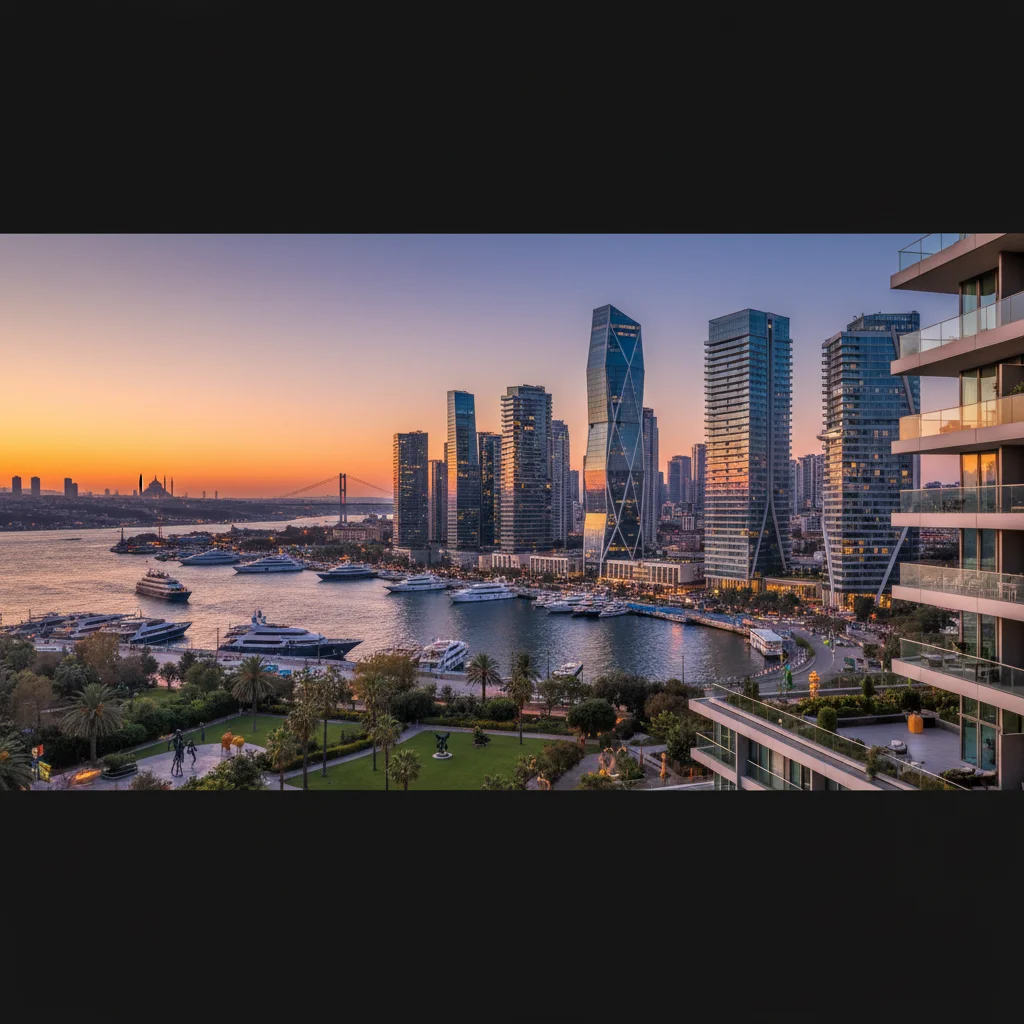
Buying real estate in Turkey for citizenship purposes is straightforward when executed in the correct legal sequence. Mistakes at the payment, currency exchange, or valuation stages can disqualify a property from citizenship eligibility, even if the buyer spent well over $400,000. Egyptian buyers should follow a disciplined roadmap from initial property selection to final passport issuance.
Egyptian investors may purchase residential apartments, standalone villas, commercial offices, retail units, or zoned construction land—either as a single unit or a combination of multiple properties totaling at least $400,000. However, properties purchased off-plan through a notarized promise-to-sell contract must satisfy strict payment verification rules, and only completed or properly registered condominium deeds qualify for immediate title transfer. Crucially, the property cannot have been previously used by another foreign national to obtain Turkish citizenship, nor can it have been owned by a foreign individual or a foreign-controlled Turkish company within the past three years.
Before signing any binding contract, the Egyptian buyer must obtain a Turkish Tax Identification Number. In 2026, this can be generated online through the interactive tax portal or in person at any local tax office using a valid Egyptian passport. With the tax number in hand, the investor opens a personal Turkish bank account. Opening an account typically requires the applicant's passport, proof of Egyptian residential address (such as a recent utility bill translated and notarized), and a local mobile phone number for banking security verification.
Under regulations enforced by the Central Bank of the Republic of Turkey, all foreign nationals purchasing property must convert their foreign currency purchase amount into Turkish Lira through a licensed Turkish bank prior to the title deed transfer. The bank issues an official Foreign Exchange Purchase Certificate confirming that at least $400,000 was sold to the Central Bank specifically for the real estate transaction. Wire transfers must flow transparently from the buyer's personal account to the seller's bank account, with exact matching transaction descriptions and title deed parcel details.
Every citizenship-linked property requires an independent valuation report issued by a licensing body authorized by the Capital Markets Board of Turkey. In 2026, valuations are assigned centrally through the official land registry valuation system to eliminate inflated pricing. The appraised market value, the foreign exchange certificate value, and the declared contract price on the title deed must each equal or exceed $400,000. Once verified, both buyer and seller appear at the Land Registry Directorate to finalize the title transfer and record the three-year no-sale pledge.
While the citizenship application is processed, Egyptian investors and their family members often wish to stay in Turkey, enroll children in international schools, or oversee property renovations. Turkey provides distinct residency permit categories depending on whether the investor meets the $400,000 citizenship threshold or prefers a lower-budget property purchase solely for living purposes.
Once the title deed is transferred and the investor obtains the Certificate of Conformity from the Ministry of Environment, Urbanization, and Climate Change, the primary applicant becomes eligible for a fast-track Investor Residence Permit. Unlike standard tourist permits, this specialized permit is processed rapidly without waiting for standard provincial quota approvals and serves as the legal bridge while the Ministry of Interior completes security background checks for citizenship.
Egyptian nationals who do not wish to commit $400,000 may still obtain a renewable short-term residence permit by purchasing a residential property in Turkey. In 2026, qualifying for a property-based residence permit requires an official appraisal value of at least $200,000 across all provinces. Furthermore, the property must be located in an open neighborhood—meaning the local foreign resident population does not exceed the 20 percent threshold enforced by the Presidency of Migration Management.
Once the main investor secures an investor residence permit or citizenship, their legal spouse and unmarried children under 18 automatically qualify for derivative residency or simultaneous citizenship inclusion. If an Egyptian investor has children over 18, those adult children cannot be included under the main real estate citizenship file unless they possess documented special needs requiring parental dependency; instead, adult children must qualify independently or apply for student residence permits if enrolled in Turkish universities.
Looking for the best real estate investment opportunity in Istanbul?
We help you choose the right property based on your budget and goals
Get a Free Consultation
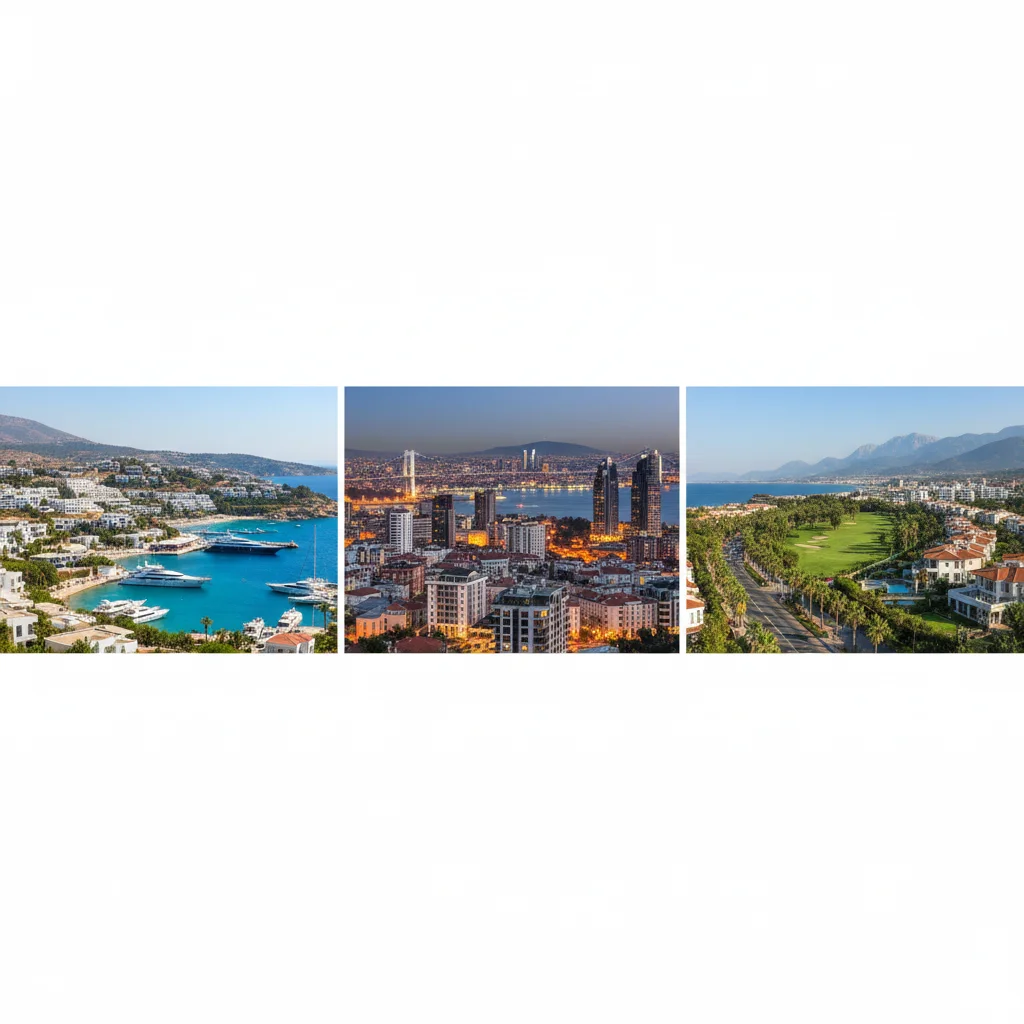
Choosing the right Turkish city depends heavily on whether an Egyptian buyer prioritizes capital appreciation, immediate euro-denominated or lira-indexed rental cash flow, lifestyle quality, or rapid resale liquidity after three years. Turkey's real estate market is far from uniform, and regional fundamentals vary considerably in 2026.
Istanbul remains the undisputed center for Egyptian citizenship investors, capturing the largest share of high-value residential and commercial transactions. European-side districts such as Basaksehir, Beylikduzu, Bahcesehir, Kagithane, and Maslak attract Egyptian families seeking modern gated communities, proximity to Arabic and international schools, and metro connectivity. Meanwhile, central districts like Sisli, Besiktas, and Asian-side hubs such as Kadikoy and Atasehir offer superior liquidity and strong corporate tenant demand.
For investors seeking lower entry prices per square meter and steady long-term domestic tenants, Ankara and Bursa provide compelling alternatives. Bursa, located across the Marmara Sea from Istanbul, combines lush greenery, thermal tourism, and a large manufacturing base. Ankara, as the diplomatic and administrative capital, delivers stable government and university-driven rental demand with less speculative volatility than coastal resort towns.
Antalya continues to lead Turkey's Mediterranean coast in international holiday home demand, offering resort-style complexes and strong seasonal yields when operated under licensed tourism rental regulations. Trabzon on the Black Sea appeals particularly to Middle Eastern and North African families seeking cooler summer climates and scenic mountain-view villas, though buyers should verify winter liquidity before committing all capital to a single vacation property.
| City | Typical Citizenship Property Type | Indicative Price Range (per sqm) | Estimated Gross Rental Yield | Primary Investment Advantage |
|---|---|---|---|---|
| Istanbul (Central & Prime) | Luxury Residences & Commercial Units | $3,000 – $6,500+ | 4.5% – 6.5% | High liquidity and strong resale demand |
| Istanbul (Developing Hubs) | Family Gated Compounds | $1,800 – $3,000 | 5.5% – 7.5% | Modern infrastructure and metro growth |
| Ankara | Residential Apartments & Offices | $1,200 – $2,400 | 6.0% – 8.0% | Stable domestic tenant base |
| Antalya | Coastal Villas & Resort Suites | $2,000 – $4,000 | 6.0% – 8.5% | Tourism appeal and foreign buyer demand |
| Bursa | Spacious Family Apartments | $1,100 – $2,000 | 5.5% – 7.0% | Proximity to Istanbul at lower entry cost |
Acquiring Turkish citizenship is only half of the equation; managing the underlying asset effectively over the mandatory three-year holding period protects net returns and preserves capital value. Many Egyptian investors reside primarily in Egypt or the Gulf while holding Turkish real estate, making professional property management essential.
Under Turkish tenancy laws, long-term residential leases provide stable occupancy, though annual rent increases for renewing tenants are tied to official consumer price index caps. Short-term daily or weekly tourist rentals can generate higher gross revenue in hubs like Istanbul and Antalya, but strict 2024–2026 tourism rental regulations now require a formal permit from the Ministry of Culture and Tourism, along with unanimous written consent from all apartment owners in the building. Consequently, investors targeting short-term yields should purchase units in purpose-built serviced residences that already hold commercial tourism zoning.
Property owners in Turkey pay an annual municipal property tax ranging between 0.1 percent and 0.6 percent depending on property classification and metropolitan status. Monthly building management fees—covering security, landscaping, pools, and concierge services—are typically paid by the tenant when occupied, or by the owner when vacant. Regarding exit taxes, Turkey grants a full exemption from capital gains tax for individuals who hold a property for at least five consecutive years before selling. If an investor sells immediately after the three-year citizenship lock expires, capital gains tax applies on the inflation-adjusted profit margin.
To maximize resale value upon completing the three-year commitment, Egyptian investors should favor properties located near major public transit lines, hospitals, and universities, as these sell rapidly to local Turkish buyers rather than relying solely on foreign investors. Holding the property for two additional years (reaching five years total) allows investors to exit entirely free of Turkish capital gains tax while still retaining lifelong citizenship.
Both Turkey and Egypt permit dual nationality, making the legal transition smooth provided applicants follow Egyptian administrative requirements. Under Egyptian nationality law, an Egyptian citizen who acquires a foreign nationality must obtain prior authorization from the Egyptian Ministry of Interior if they wish to retain their Egyptian citizenship alongside the new Turkish passport.
Failure to notify Egyptian authorities or obtain retention approval within the statutory timeframe can complicate passport renewals or administrative matters in Egypt. Male applicants of military service age must also verify their conscription status before applying for dual-citizenship permission in Cairo.
For the Turkish citizenship application file, Egyptian investors must prepare the following authenticated documents:
Even experienced investors occasionally encounter costly delays when purchasing Turkish property without independent legal due diligence. Avoiding the following pitfalls protects both your capital and your citizenship timeline:
Yes. Turkey fully permits dual and multiple citizenships without requiring applicants to renounce their original nationality. Egypt also allows dual citizenship, provided the Egyptian citizen submits a formal request to the Egyptian Ministry of Interior's Passports, Immigration, and Nationality Administration seeking permission to acquire Turkish citizenship while retaining Egyptian nationality.
Once the $400,000 property purchase is completed, the title deed is registered, and the Certificate of Conformity is issued, the formal citizenship approval process typically takes between four and seven months. Total end-to-end timelines depend on how quickly the applicant completes document legalization in Egypt and schedules biometric appointments.
No. The $400,000 real estate citizenship route imposes zero minimum physical residency requirements and no Turkish language proficiency test. Investors can complete much of the process through a legalized Power of Attorney and only need to visit briefly for biometric registration, either in Turkey or at a Turkish embassy abroad.
Your citizenship eligibility is locked in once the property valuation, Foreign Exchange Purchase Certificate, and title deed transfer meet the $400,000 benchmark at the time of purchase. Subsequent currency fluctuations during the three-year holding period do not affect your approved citizenship status.
Yes. You may combine two or more residential or commercial units—even across different cities in Turkey—provided their combined official appraisal values and bank-verified payments exceed $400,000, and the three-year non-sale annotation is placed on every property included in the application.
No. Under Turkish citizenship law, only the primary investor's legal spouse and unmarried children under the age of 18 are included in the investment application. Parents and adult children over 18 may reside in Turkey through separate residence permits or qualify for citizenship through their own independent $400,000 investment.
Note: Information in this guide was sourced and verified with industry insights from Emlak Platform, Mbany Real Estate, and Massar Istanbul.