US Dollar - USD
- Turkish Lira - TRY
- US Dollar - USD
- Euro - EUR
- Pound sterling - GBP
- Russian Ruble - RUB
- Chinese Yuan - CNY
- Georgian lari - GEL
- Saudi Riyal - SAR
- UAE Dirham - AED
- Syrian Pound - SYP
Turkey occupies a transcontinental position bridging Europe and Asia, creating one of the world's most dynamic real estate environments. In 2026, the country's diverse geographical landscape provides international buyers, institutional funds, and individual investors with an unprecedented spectrum of property options. From the cosmopolitan skyline of Istanbul to the sun-drenched coastlines of Antalya and the elite nautical havens of the Aegean, each region presents distinct legal, financial, and lifestyle advantages.
Understanding the micro-climates, regional growth corridors, urban renewal master plans, and infrastructure developments across Turkey is critical for maximizing capital appreciation and rental yield. Furthermore, Turkey’s progressive legal framework—encompassing the Turkish Citizenship by Investment (CBI) program and real estate-backed residency permits—requires an analytical approach tailored to regional valuation benchmarks and market liquidity.
Turkey is officially divided into seven geographical regions, each defined by distinct topographical, climatic, and economic profiles. For property investors, these regional variations translate into varied rental demand cycles, tenant demographics, and entry price points.
Looking for the best real estate investment opportunity in Istanbul?
We help you choose the right property based on your budget and goals
Get a Free Consultation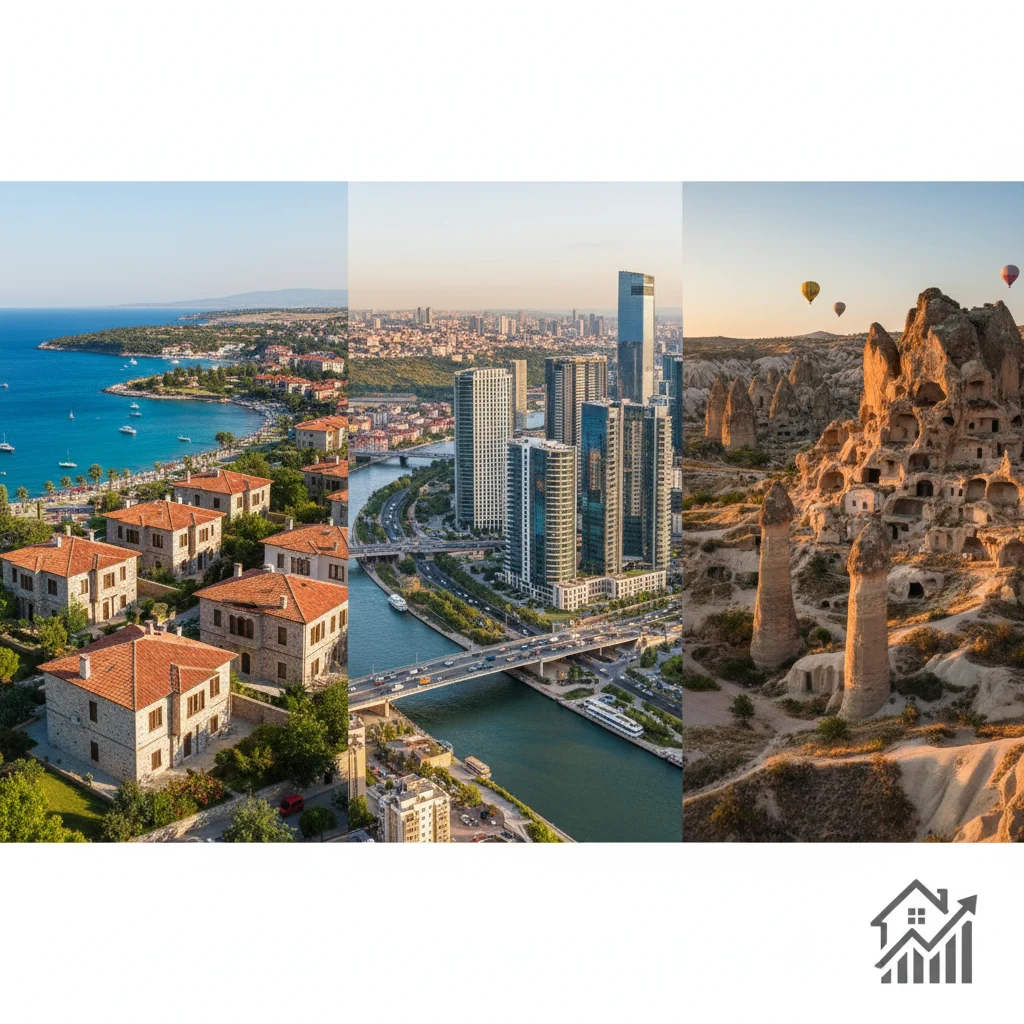
Representing the commercial, cultural, and financial nucleus of Turkey, the Marmara Region accounts for the highest transaction volumes in the national property register. Anchored by the megacity of Istanbul, this region also encompasses high-growth secondary hubs such as Bursa, Kocaeli, and Yalova.
Istanbul remains the premier destination for foreign direct investment (FDI) in Turkish real estate. Divided by the Bosphorus Strait into the European and Asian (Anatolian) sides, the city offers two contrasting investment environments:
South of Istanbul, Bursa serves as an automotive and manufacturing powerhouse with a booming population. Its real estate appeals to buyers seeking alpine mountain views near Uludağ, combined with affordable square-meter prices compared to Istanbul. Yalova, strategically linked to Istanbul via high-speed car ferries and the Osmangazi Bridge, has evolved into a premier thermal spa and suburban villa enclave popular among regional commuters and Gulf-based investors.
Spanning Turkey’s southern coastline, the Mediterranean Region is dominated by year-round tourism, agricultural vitality, and strong international expat communities. Real estate here is characterized by high seasonal yields, lifestyle acquisitions, and an expanding year-round tenant base.
Antalya is Turkey’s top resort real estate destination, driven by an international airport with non-stop European, Middle Eastern, and Central Asian connectivity. Key micro-markets include:
Positioned east of Antalya, Mersin has rapidly emerged as a favorite for entry-level foreign investors. With the expansion of the Çukurova International Airport, modern maritime port facilities, and long stretches of Mediterranean sandy beaches, Mersin offers attractive entry prices and high capital growth potential as regional infrastructure solidifies.
Looking for the best real estate investment opportunity in Istanbul?
We help you choose the right property based on your budget and goals
Get a Free Consultation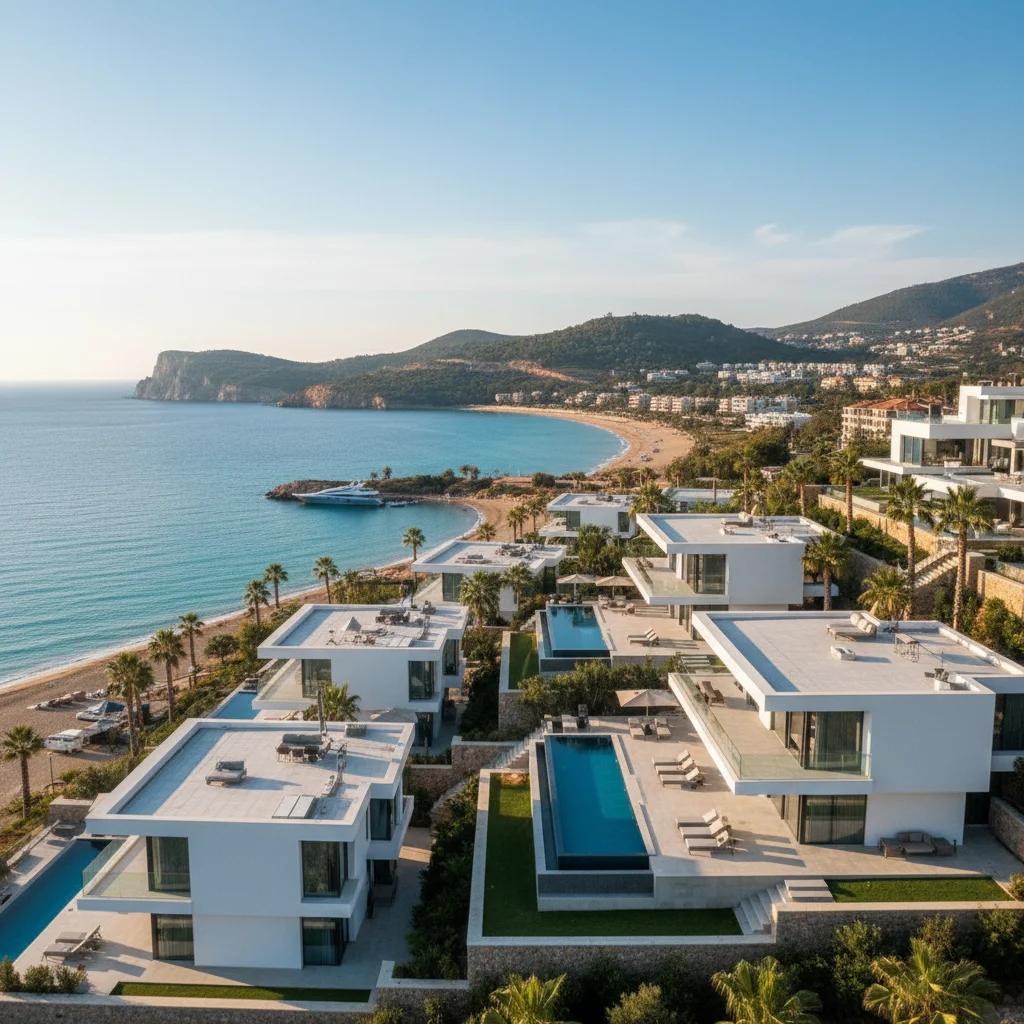
Characterized by olive groves, rugged coastlines, and a sophisticated Mediterranean lifestyle, the Aegean Region hosts Turkey’s most exclusive luxury real estate markets.
As Turkey’s third-largest city, Izmir combines relaxed Aegean living with an expanding technology, shipping, and university sector. Prime districts like Bornova, Bayraklı (the new skyscraper district), and Karşıyaka attract domestic professionals, while coastal suburbs like Urla and Çeşme serve as ultra-luxury weekend retreats featuring stone-built designer estates and private vineyards.
Bodrum stands in a league of its own, rivaling Monaco and Saint-Tropez for high-net-worth real estate. Neighborhoods such as Yalıkavak (home to Yalıkavak Marina), Türkbükü, and Gümüşlük feature branded residences (e.g., Mandarin Oriental, Ritz-Carlton), secluded coastal mansions, and contemporary architecture commanding multi-million-euro price tags.
Part of Muğla province, Fethiye and the elite yachting port of Göcek offer low-rise residential regulations to preserve the natural canopy. Göcek is particularly coveted for waterfront villas with private mooring rights, catering to the international sailing community.
The Central Anatolian plateau provides a market insulated from seasonal tourism fluctuations, driven by government, diplomatic missions, and higher education.
Ankara offers a distinct property market oriented around long-term stability. Districts like Çankaya, Gaziosmanpaşa, and Çayyolu house foreign embassies, ministries, and international corporate headquarters. Investors in Ankara benefit from reliable tenancy rates, long-term occupancy by civil servants and diplomats, and lower volatility compared to resort markets.
Characterized by mild, humid conditions, alpine valleys, and extensive tea and hazelnut plantations, the Black Sea coast has developed a dedicated niche following.
Trabzon remains a significant hub for investors from the Gulf Cooperation Council (GCC) countries who prioritize cooler summer climates, mountain-sea topography, and family-sized apartments. Villas nestled in the green highlands of Akçaabat, Yomra, and Uzungöl offer an alternative to Mediterranean heat, driving seasonal leisure leasing.
While historically secondary for direct international real estate investments, cities such as Gaziantep—a UNESCO gastronomic capital and trade hub—are expanding their domestic property pipelines. Infrastructure expansion, regional industrial logistics, and urban regeneration offer opportunities primarily for commercial real estate and domestic developmental funds.
To evaluate where capital allocates most efficiently, investors must evaluate entry prices, historical appreciation, and yield performance across regions:
| Region / City | Primary Asset Class | Avg. Price / m² (2026 USD Est.) | Gross Rental Yield | Primary Target Demographic |
|---|---|---|---|---|
| Istanbul (CBD / Core) | Luxury High-Rise / Commercial | $2,800 - $6,500+ | 5.5% - 7.5% | CBI Buyers, Corporate Executives, Expats |
| Istanbul (Suburbs) | Master-Planned Compounds | $1,200 - $2,200 | 6.0% - 8.0% | Middle-class Families, Long-term Commuters |
| Antalya (Center/Coast) | Resort Condominiums & Villas | $1,600 - $3,500 | 7.0% - 9.5% | Holiday Rentals, Retirees, European Investors |
| Bodrum (Muğla) | Branded Mansions / Sea-View Villas | $4,500 - $12,000+ | 4.5% - 6.0% | Ultra-High-Net-Worth Individuals (UHNWI) |
| Izmir (Central/Urla) | Urban Penthouses / Boutique Villas | $1,800 - $4,000 | 5.0% - 6.8% | Domestic Relocators, Tech Entrepreneurs |
| Ankara (Çankaya) | Administrative Apartments | $1,100 - $2,400 | 6.5% - 8.0% | Diplomats, Civil Servants, University Staff |
| Mersin | Modern Beachfront Residential | $850 - $1,500 | 7.5% - 9.0% | Budget Lifestyle Investors, Emerging Capital |
Foreign nationals acquiring property in Turkey benefit from a transparent, Land Registry-administered process. Understanding the legal milestones ensures capital security and regulatory compliance.
Every foreign investor must secure a Vergi Kimlik Numarası (Tax Number) from the local tax office or through the online tax authority (GİB) portal. Following tax registration, opening an account in a licensed Turkish retail or investment bank allows transparent fund transfers and streamlined currency exchange certification.
An official valuation report conducted by an SPK-licensed (Capital Markets Board) independent appraisal company is legally mandated for every real estate transaction involving a foreign national. The valuation verifies the actual market value of the property, protecting buyers from artificially inflated figures and serving as the benchmark for immigration compliance.
Under Turkish Central Bank regulations, foreign buyers must exchange foreign currency (USD, EUR, GBP, etc.) into Turkish Lira through an authorized domestic bank prior to the property transfer. The Central Bank issues a DAB certificate documenting the transaction, which is submitted to the Land Registry Directorate (Tapu ve Kadastro Genel Müdürlüğü).
The definitive transfer of property ownership takes place exclusively in person at the local Land Registry office, or via a certified Power of Attorney (Vekaletname) granted to a licensed attorney. When all registry fees, stamp duties, and identity verifications are validated, the official Title Deed (Tapu Senedi) is issued to the investor.
Turkey links its real estate sector directly to immigration and sovereign status solutions, offering two clear paths for foreign property purchasers.
The Turkish Citizenship by Investment framework offers global mobility, visa-free or visa-on-arrival access to over 110 destinations, and lifetime citizenship for the investor, their spouse, and minor children (under 18). Key programmatic requirements include:
For individuals seeking long-term residency without committing to full citizenship thresholds, the Turkish Directorate of Migration Management grants real estate-backed residency permits:
Acquiring real estate in Turkey is only the initial stage; sustained return on investment requires hands-on asset management tailored to local rental laws and regional demand profiles.
Turkey's Tourism-Purpose Residential Rental Law enforces structural regulations over short-term holiday rentals (defined as lets under 100 consecutive days):
For long-term buy-to-let investments in Ankara, Izmir, or residential Istanbul, contracts fall under the Turkish Code of Obligations (Türk Borçlar Kanunu). Best practices include:
Infrastructure development across Turkey serves as a key driver of long-term capital appreciation. Savvy investors track government investments to identify emerging property corridors:
Turkey's diverse regional landscape rewards structured, informed real estate strategies. Whether allocating capital into the high-liquidity urban landscape of Istanbul, capturing premium tourism yields along the Mediterranean shores of Antalya, or acquiring legacy wealth estates within the exclusive bays of Bodrum, the Turkish market offers tailored opportunities for every investment objective.
By balancing geographical characteristics with legal compliance, immigration requirements, and professional property management, investors can build resilient, high-yielding portfolios in one of the world's most dynamic emerging real estate markets.
Market insights and data compiled with reference to industry sources:
- Emlak Platform
- Mbany Real Estate
- Massar Istanbul