US Dollar - USD
- Turkish Lira - TRY
- US Dollar - USD
- Euro - EUR
- Pound sterling - GBP
- Russian Ruble - RUB
- Chinese Yuan - CNY
- Georgian lari - GEL
- Saudi Riyal - SAR
- UAE Dirham - AED
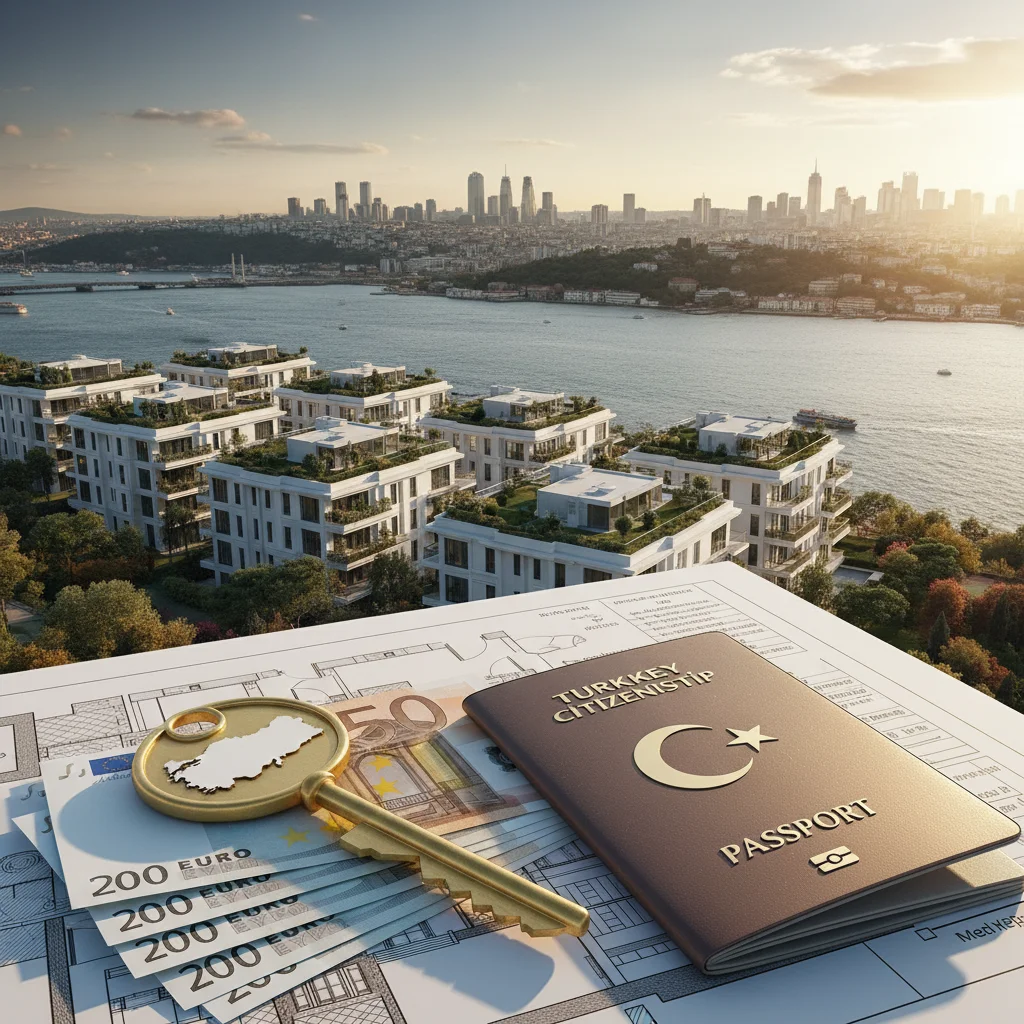
Investing in prime real estate across the Republic of Turkey has evolved from a lifestyle choice into an institutional-grade wealth preservation strategy. For international buyers, high-net-worth individuals, and overseas family offices, seeking villas for sale in Turkey in USD offers an essential shield against exchange rate volatility while opening pathways to premium global residency and citizenship. As the Turkish real estate market modernizes in 2026, foreign transactions remain closely pegged to the United States Dollar, providing foreign capital with structural transparency, standardized valuation metrics, and straightforward cross-border banking operations.
Whether navigating the ultra-prime waterfront mansions lining Istanbul's Bosphorus strait, secluded minimalist estates along the Bodrum peninsula, or sprawling golf retreats in Antalya, transaction values denominated in USD allow buyers to assess price per square meter on an internationally recognized benchmark. Furthermore, the alignment of property acquisitions with government incentives—such as the Turkish Citizenship by Investment (TCBI) framework—cements the position of dollar-based property transactions as the preferred channel for cross-border private real estate capital.
Looking for the best real estate investment opportunity in Istanbul?
We help you choose the right property based on your budget and goals
Get a Free Consultation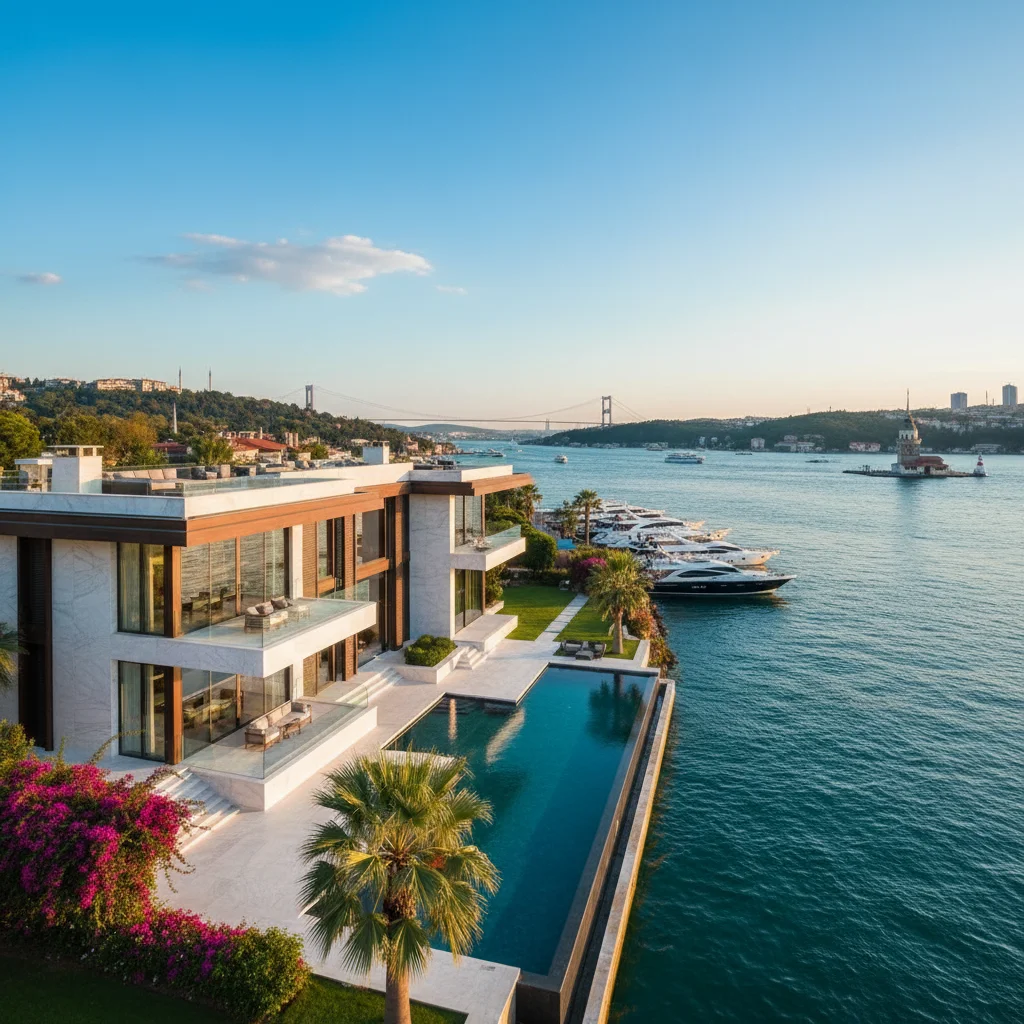
For international investors, negotiating and purchasing high-end residential assets in US Dollars provides distinct financial and operational benefits over local-currency transactions:
While the Turkish Lira (TRY) fluctuates in response to local monetary policies and macroeconomic shifts, luxury villas retain their underlying asset value in hard currencies. By referencing purchase agreements, payment milestones, and resale targets in USD, foreign investors effectively lock in property values, neutralizing local inflationary pressures and maintaining foreign exchange stability throughout long-term investment holding periods.
The Turkish Citizenship by Investment program mandates a minimum real estate commitment of $400,000 USD (or equivalent in foreign convertible currency). When properties are appraised and marketed directly in USD, investors avoid discrepancies between fluctuating conversion rates and minimum statutory thresholds at the exact moment the Foreign Exchange Purchase Certificate (Döviz Alım Belgesi or DAB) is issued by the Central Bank of the Republic of Turkey (TCMB).
Premium villas in resort hotspots like Bodrum, Kalkan, and Fethiye, as well as executive retreats in Istanbul's Zekeriyakoy, command rental yields tied directly to foreign currencies. High-end holiday rentals and corporate tenant leases are standardly executed in USD or Euros, offering owners steady net rental yields between 6% and 9% annually, untainted by domestic currency swings.
International SWIFT and wire transfers routed from the United States, Europe, or the Gulf Cooperation Council (GCC) countries flow seamlessly when clearing through foreign currency accounts within the Turkish banking system. Denominating contract values in USD reduces intermediary conversion fees, reduces settlement delays, and guarantees complete auditability for source-of-funds compliance.
Strategic property acquisition demands a clear understanding of regional market dynamics. Turkey features diverse micro-markets, each presenting distinct yield structures, demographic profiles, and appreciation dynamics.
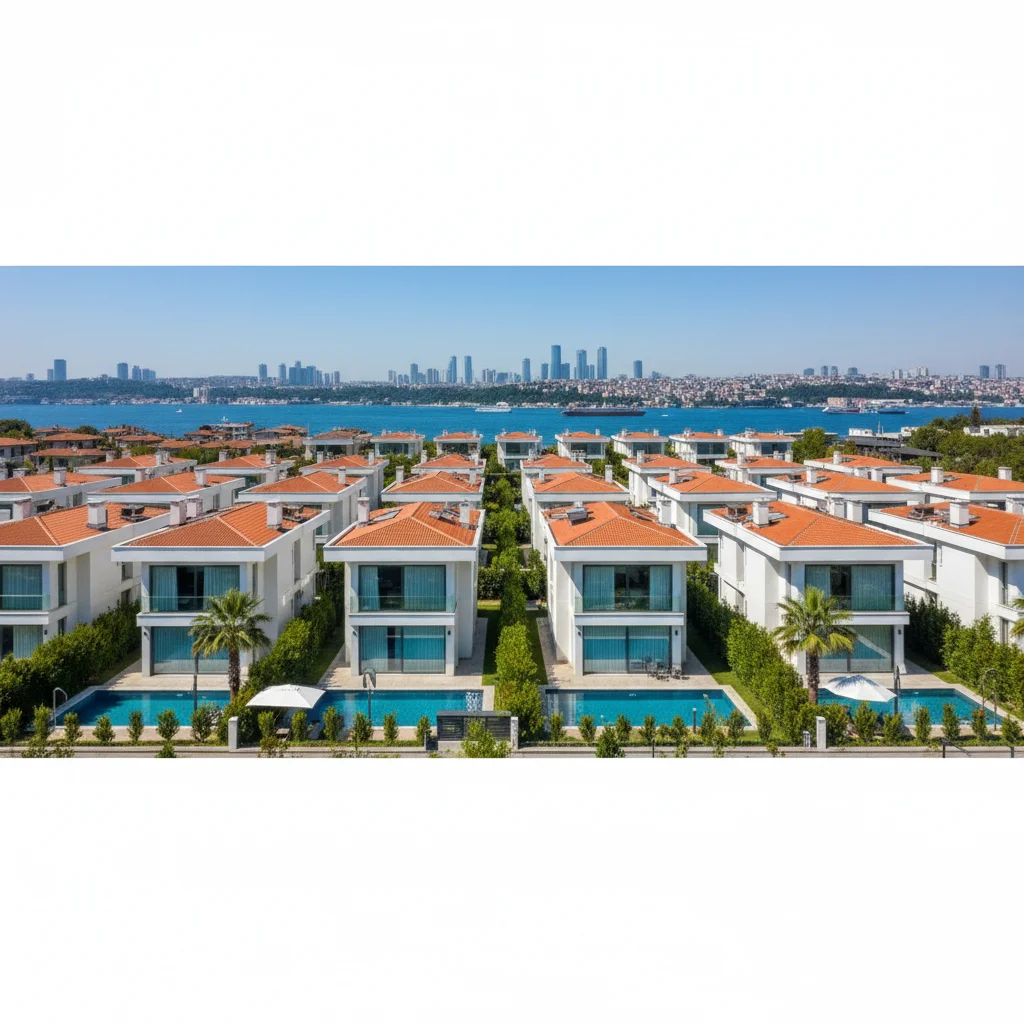
As Turkey’s primary commercial capital, Istanbul represents the ultimate luxury real estate market. Villa developments here fall broadly into two categories: historical waterfront manors (Yalı) on the Bosphorus shoreline and modern private compounds on the city's green outer ring.
Often termed the St. Tropez of the Eastern Mediterranean, Bodrum represents Turkey's premier enclave for avant-garde architectural design, superyacht marinas, and ultra-high-net-worth tourism.
With more than 300 days of sunshine per year, the southern coast is the core engine for holiday rentals and European retiree migration.
Looking for the best real estate investment opportunity in Istanbul?
We help you choose the right property based on your budget and goals
Get a Free Consultation
The following table outlines standard performance benchmarks for primary luxury villa hubs across Turkey, calibrated to 2026 market dynamics:
| Region / City | Primary Sub-Markets | Average Villa Price (USD) | Average Plot Size (sqm) | Projected Gross ROI | Dominant Buyer Motivation |
|---|---|---|---|---|---|
| Istanbul (North) | Zekeriyakoy, Sariyer, Tarabya | $1,200,000 – $4,500,000 | 500 – 1,200 | 4.5% – 5.5% | Primary Living, Capital Growth, TCBI |
| Istanbul (West) | Buyukcekmece, Silivri | $450,000 – $950,000 | 400 – 800 | 5.0% – 6.5% | TCBI Eligibility, Family Living |
| Bodrum Peninsula | Yalikavak, Turkbuku, Bitez | $1,500,000 – $8,000,000 | 750 – 2,500 | 7.0% – 9.0% | Ultra-Luxury Lifestyle, Summer Yield |
| Antalya Province | Belek, Kalkan, Konyaalti | $500,000 – $1,800,000 | 400 – 1,000 | 6.5% – 8.5% | Holiday Rentals, Winter Sun, Residency |
| Mugla / Fethiye | Gocek, Ovacik, Oludeniz | $420,000 – $1,200,000 | 450 – 900 | 6.0% – 7.5% | Sailing Community, Vacation Asset |
The acquisition of a villa in Turkey remains the most straightforward vehicle to obtain Turkish nationality through capital deployment.
Under statutory regulations maintained in 2026, foreign nationals who purchase one or multiple real estate assets totaling at least $400,000 USD are eligible to apply for Turkish citizenship for themselves, their spouse, and all children under the age of 18. The underlying title deed (Tapu) must carry an annotation (şerh) restricting resale for a minimum period of three years.
A critical step in qualifying for citizenship is securing the Döviz Alım Belgesi (DAB). Turkish legislation dictates that foreign funds designated for real estate purchases must be converted into Turkish Liras via an authorized commercial Turkish bank, which executes the transaction with the Central Bank of Turkey. Key compliance rules include:
Securing a villa in Turkey involves a transparent, highly systematized legal process governed by the Turkish Land Registry system.
Prior to executing any deposit or preliminary sales agreement, professional legal counsel must examine the property's legal status at the Land Registry. This involves confirming:
Every foreign investor must obtain a Turkish Tax Identification Number (Vergi Kimlik Numarası), which can be acquired online or through any municipal tax office. Following tax registration, an investor opens a resident foreign currency bank account at an institution such as Ziraat Bank, Garanti BBVA, or İşbank to facilitate the inward transfer of USD funds.
Turkish law requires all foreign property acquisitions to undergo an independent appraisal by an agency licensed by the Capital Markets Board of Turkey (Sermaye Piyasası Kurulu - SPK). The appraiser determines the property’s true market value, protecting the investor from artificial inflation and establishing legal eligibility for citizenship or residency filings.
Once all clearances, the DAB, and certified translation records are prepared, both the buyer (or their legal representative holding a Power of Attorney) and the seller attend the local Land Registry Office. Upon confirmation of the full payment receipt, the official title deed is printed and handed to the new owner, legally concluding the transfer of ownership.
Calculating the true net acquisition cost requires budgeting for ancillary transaction expenses, which generally add 6% to 8% above the purchase price.
The standard property conveyance tax in Turkey is 4% of the legally declared transaction value. In residential transactions, this cost is legally split equally (2% by the buyer and 2% by the seller), although commercial agreements can negotiate specific distributions depending on terms.
Newly built villas sold directly by licensed construction firms are technically subject to Value Added Tax (KDV), ranging from 1% to 20%. However, non-resident foreign investors transferring funds in foreign currency from abroad are entitled to a full KDV Exemption under Article 13/i of the VAT Law, provided the asset is maintained in their possession for at least three years.
Maximizing returns on Turkish villas requires proactive management, particularly for overseas landlords who reside abroad during the operational year.
Detached coastal villas in regions like Bodrum, Kalkan, and Kas perform exceptionally well in the short-term seasonal rental market. Turkey's short-term rental laws require owners engaged in holiday rentals to hold official tourism licenses from the Ministry of Culture and Tourism. Working with licensed property management companies ensures complete legal compliance, guest registration with local authorities (via the Identity Notification System), and professional handling of guest logistics.
Conversely, for urban villas in Istanbul's residential districts, long-term corporate leases to multinational executives or diplomatic personnel provide uninterrupted cash flows denominated in or pegged to USD, eliminating seasonal vacancy risks and reducing wear and tear.
Independent villas demand ongoing preventative maintenance, including:
While the Turkish real estate ecosystem is accessible, foreign purchasers must exercise strict diligence to safeguard their investments:
Never purchase a villa that does not possess an İskan (Occupancy Certificate). Properties lacking this certification may face municipal fines, utility rate penalties, or demolition orders if they deviate from initial zoning permits. Ensure your attorney performs an exhaustive title search to rule out prior judicial mortgages or tax liens.
A frequent challenge for buyers seeking citizenship is acquiring a property where the seller insists on declaring a lower value at the Land Registry to reduce their personal capital gains tax exposure. For citizenship applicants, the legally declared value and the SPK valuation report must both meet the statutory $400,000 USD threshold. Investors should only work with institutional developers and transparent sellers who declare 100% of the true purchase price.
Turkish law requires all operating real estate agents to hold an official Vocational Qualification Certificate (Mesleki Yeterlilik Belgesi) and an authorized Real Estate Trade Authorization Certificate (Taşınmaz Ticareti Yetki Belgesi). Partnering with licensed consultancies ensures operational integrity, contractual validity, and consumer protection throughout the process.
The structural demand for detached luxury villas in Turkey continues to outpace supply in established prime corridors. Rapid infrastructure investments—such as expanded high-speed rail lines, modernized coastal marina hubs, and enhanced international airport capacity across Istanbul and Antalya—have reinforced the country's position as a cross-continental lifestyle and investment hub.
With an increasing global shift toward lifestyle mobility, residency diversification, and wealth hedging, Turkish luxury villas priced in US Dollars remain one of the most balanced, capital-efficient, and structurally sound real estate investments across the wider Mediterranean and Middle Eastern regions.
Yes. International buyers can agree on property prices in USD and transfer foreign funds into Turkish bank accounts in USD. However, under legal guidelines for foreign purchasers (particularly those applying for citizenship or residency), the funds are converted into Turkish Liras via the Central Bank to obtain the Döviz Alım Belgesi (DAB), after which the settlement is completed.
Yes. By purchasing one or more properties with a combined SPK-appraised value of at least $400,000 USD and agreeing to hold the asset for at least three years, you qualify to apply for Turkish citizenship for yourself, your spouse, and dependent children under 18 years of age.
Turkey operates under the Land Registry Law amended in 2012, which abolished old reciprocity rules and opened property ownership to citizens of over 180 countries. Only a few specific nationalities face direct land ownership restrictions, such as citizens of Syria, Armenia, North Korea, and Cuba. In certain border zones, specific zoning limits apply to Greek and Bulgarian nationals.
Kat İrtifakı (Construction Servitude) indicates ownership rights over a specific unit or villa within a development that is either under construction or awaiting final municipal building sign-off. Kat Mülkiyeti (Full Freehold Ownership) confirms that the villa is completely finished, has received its municipal occupancy permit (İskan), and complies fully with all building standards. Securing a villa with Kat Mülkiyeti is always the preferred, lowest-risk approach.
Annual maintenance costs vary based on whether the villa is a standalone detached property or situated within a serviced private compound. In gated estates with amenities like security, communal grounds, and clubhouses, monthly maintenance fees (Aidat) range from $150 to $600 USD. For standalone villas, ongoing private maintenance (pool cleaning, gardening, security monitoring) averages between $2,000 and $5,000 USD annually.
Yes, but you must comply with Turkish holiday rental laws. To let a residential property for periods under 100 days, property owners must apply for a formal short-term tourism license from the Ministry of Culture and Tourism, obtain approval from co-owners in multi-unit communities, and register all guest identities with local police databases.
Information and regulatory guidelines in this article were verified and sourced from: