US Dollar - USD
- Turkish Lira - TRY
- US Dollar - USD
- Euro - EUR
- Pound sterling - GBP
- Russian Ruble - RUB
- Chinese Yuan - CNY
- Georgian lari - GEL
- Saudi Riyal - SAR
- UAE Dirham - AED
- Syrian Pound - SYP
Acquiring a detached home or a semi-detached villa across the Turkish real estate landscape has evolved considerably over recent years. Historically viewed as an exclusive asset class reserved solely for ultra-high-net-worth investors, villas in Turkey are increasingly accessible to middle-income international buyers and lifestyle seekers. This accessibility stems from progressive developer-backed financing structures, expanding suburban transit networks, and an influx of suburban master-planned communities situated outside high-density metropolitan cores.
For cross-border investors, expatriates, and regional families seeking spacious residential living, exploring affordable villas on installments in Turkey presents a compelling strategic opening. In 2026, developer-led financing models dominate off-plan and under-construction sectors, providing an alternative to traditional commercial mortgages that often present administrative barriers for foreign non-residents. By spreading capital commitments across milestone-based construction intervals, international purchasers mitigate immediate foreign exchange exposure while locking in early-stage pricing in a fundamentally strong real estate market.
To navigate this dynamic asset class successfully, buyers must look beyond headline price tags and evaluate underlying construction timelines, zoning frameworks (İmar durumu), title deed registration processes, and cash flow schedules. Whether the ultimate objective centers on obtaining a Turkish passport via Citizenship by Investment, securing long-term family residency, or establishing a recurring short-term holiday rental yield, understanding the mechanics of buying a villa on installments is essential for a safe, profitable acquisition.
Opting for a private villa over an apartment represents a definitive upgrade in personal living space, private gardens, and standalone infrastructure. When paired with structured installment schedules, this investment approach yields significant commercial and operational advantages:
To pinpoint affordable villas that offer genuine lifestyle value alongside reliable capital appreciation, investors must expand their search parameters beyond central urban districts. Strategic planning by municipal authorities has decentralized municipal transport, turning satellite towns into thriving suburban residential hubs.
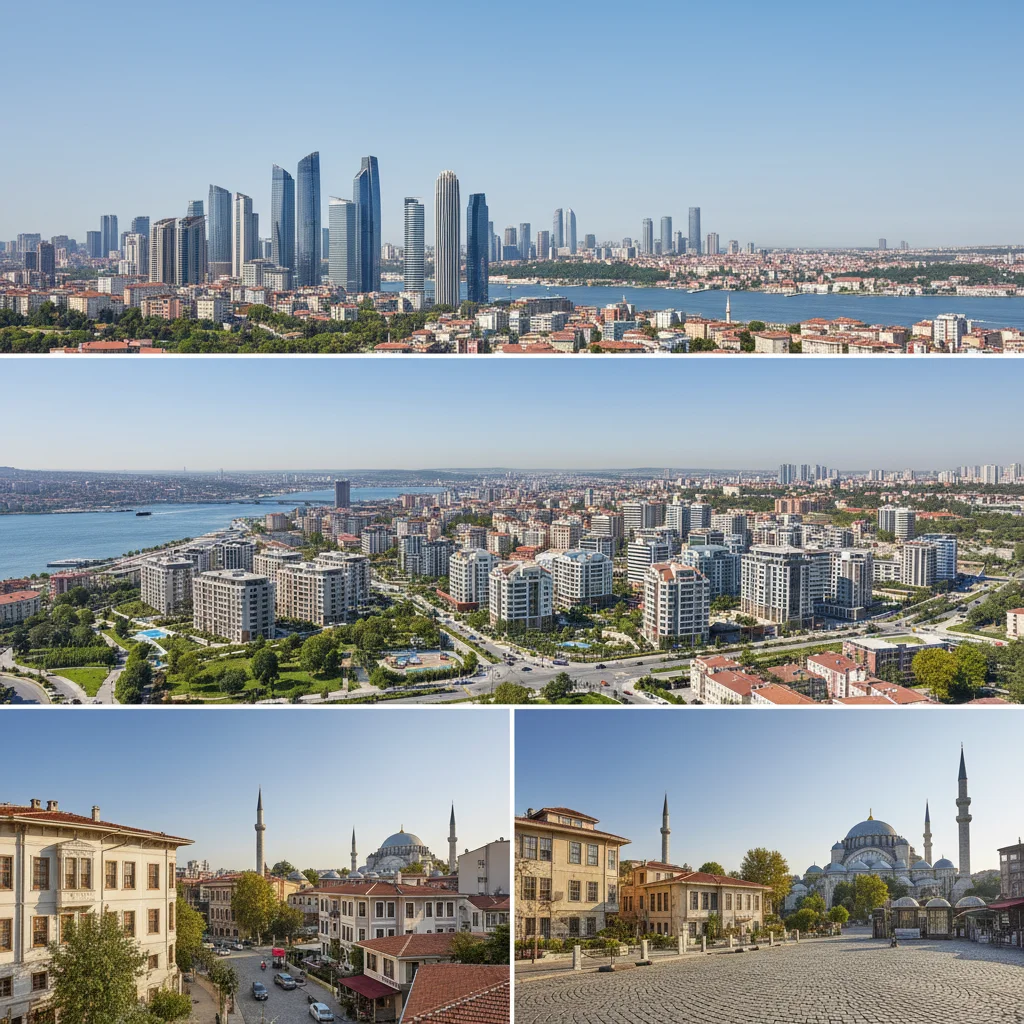
Central Istanbul real estate commands some of the highest per-square-meter figures in the Eurasian region, but western districts along the Sea of Marmara coast host highly competitive villa communities. Silivri stands out as the focal point for buyers seeking detached family properties with expansive private land parcels at entry-level investment thresholds. With direct access to the E-5 and Northern Marmara Highway networks, Silivri balances tranquil coastal life with commuter viability.
Adjacent areas like Büyükçekmece and Çatalca cater to varied buyer profiles. Büyükçekmece offers coastal luxury at a fraction of Bosphorus pricing, featuring gated compounds with community amenities, shared sports courts, and proximity to international schools. Çatalca, favored for its agricultural expanses and natural topography, serves buyers seeking eco-style farmhouses, sprawling detached plots, and quiet privacy within an hour's drive of Istanbul Airport.
Antalya province remains a preferred destination for international lifestyle buyers, driven by year-round sunshine, deep tourism infrastructure, and strong rental yields. While prime areas like Konyaaltı and Lara feature high apartment densities, surrounding municipalities provide fertile ground for cost-effective villa developments.
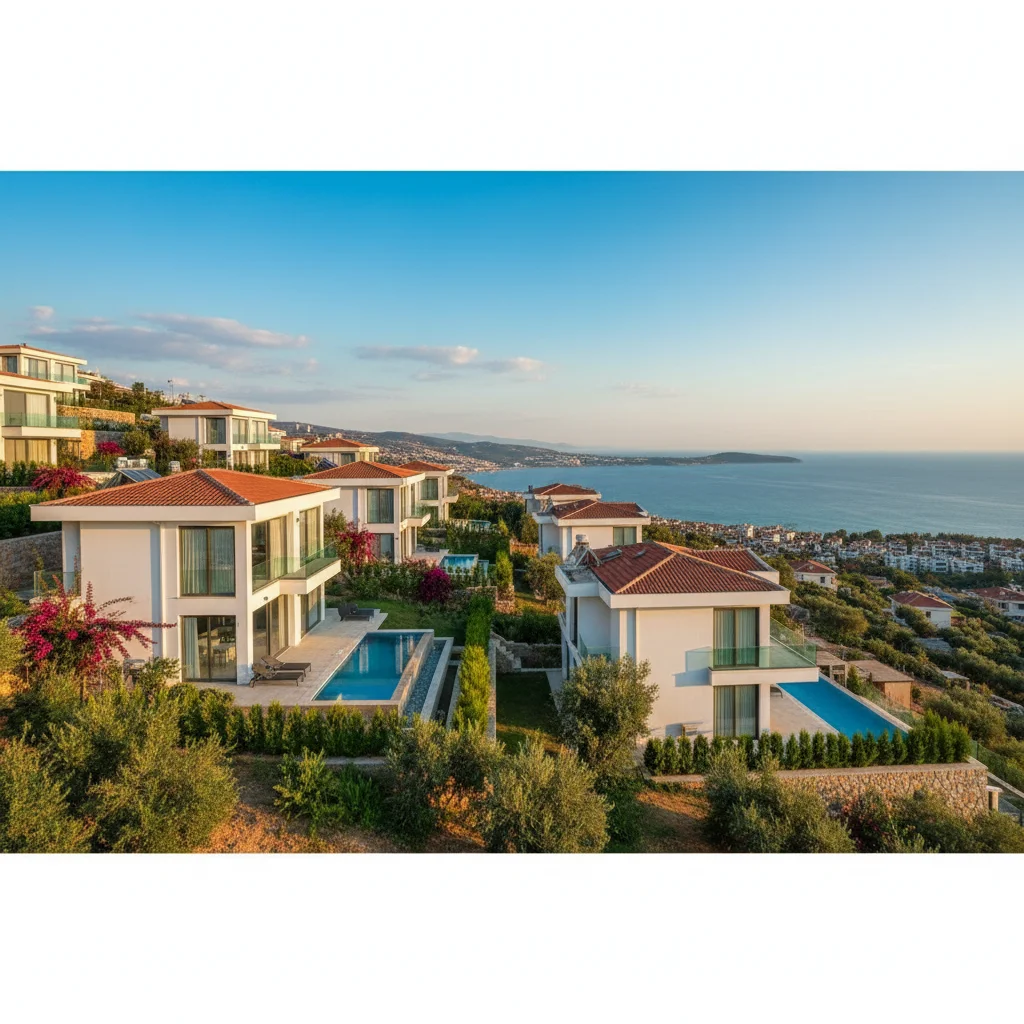
Döşemealtı, located just north of Antalya’s city center, has transformed into a prime residential villa hub. Positioned at an elevated altitude with cooler microclimates and lower humidity, it hosts modern duplex and triplex compounds featuring individual swimming pools and advanced smart-home integrations. Further east, suburban pockets of Alanya, such as Kargıcak and Demirtaş, offer hillside villas with direct panoramic Mediterranean views supported by long-term installment programs linked directly to developer construction phases.
Accessible via the Osmangazi Bridge and high-speed car ferries departing from Istanbul's southern piers, the provinces of Yalova and Bursa represent leading centers for cost-conscious villa acquisitions. Yalova’s thermal districts and coastal settlements like Çınarcık combine natural settings with practical access to three major economic hubs: Istanbul, Kocaeli, and Bursa.
Bursa’s Mudanya district, situated along the southern Marmara coast, pairs historic seaside charm with expansive new residential compounds. Further inland, Sapanca in Sakarya province continues to attract regional vacation home buyers. Known for its serene freshwater lake and forested mountain backdrops, Sapanca's luxury chalet-style bungalows and detached villas demonstrate exceptional seasonal occupancy rates, driving both rental yields and sustained value appreciation.
The following data outlines typical market parameters for affordable villa developments offering developer installment terms across major Turkish investment corridors in 2026:
| Region / District | Average Starting Price (USD) | Average Villa Layout | Standard Down Payment | Typical Installment Duration | Target Buyer Profile |
|---|---|---|---|---|---|
| Silivri (Istanbul) | $280,000 - $360,000 | 3+1 to 4+1 Detached | 35% - 50% | 24 - 36 Months | Family Living & Commuters |
| Döşemealtı (Antalya) | $290,000 - $380,000 | 4+1 Private Pool | 40% - 50% | 18 - 24 Months | Expatriates & Lifestyle Seekers |
| Yalova (Termal/Çınarcık) | $220,000 - $290,000 | 3+1 Semi-Detached | 30% - 40% | 24 - 48 Months | Vacation & Wellness Buyers |
| Mudanya (Bursa) | $240,000 - $320,000 | 4+1 Duplex / Sea View | 35% - 45% | 18 - 30 Months | Permanent Relocation & Families |
| Demirtaş (Alanya) | $250,000 - $340,000 | 3+1 Villa Compound | 40% - 50% | 12 - 24 Months | Seasonal Holiday Rentals |
Looking for the best real estate investment opportunity in Istanbul?
We help you choose the right property based on your budget and goals
Get a Free Consultation
Unlike banking mortgages, which entail extensive international credit underwriting, personal income verification apostilles, and restrictive loan-to-value ratios, purchasing a Turkish villa via developer installment financing is structured as a direct bilateral contract between the buyer and the construction company. However, foreign buyers must establish clear contractual protections from day one.
Under conventional Turkish developer financing, the transaction hinges on a defined down payment (typically between 30% and 50% of the agreed purchase price), with the remaining balance scheduled across fixed payment intervals. Traditionally, developers have issued formal promissory notes (Senet) corresponding to each individual installment due date. As each payment clears through documented bank wire transfers, the developer cancels and returns the physical promissory note to the buyer.
In modern high-volume developments, these notes are increasingly integrated directly into a comprehensive Notarized Promise of Sale Contract (Noter Onaylı Satış Vaadi Sözleşmesi). This binding agreement explicitly details every payment installment date, associated currency indices, delay penalty protections, and project construction milestones.
A central question for installment buyers is: When is the Title Deed (Tapu) officially transferred to my name? In Turkey, developers adopt one of two legal methods to convey ownership during an installment arrangement:
A primary driver for foreign investment in Turkish real estate involves securing administrative residency privileges or direct economic citizenship. Purchasing a villa on installments interacts directly with these state regulatory frameworks, requiring careful financial sequencing.
Under active real estate citizenship statutes, foreign investors must commit a minimum of $400,000 USD (or equivalent foreign currency converted via the Central Bank's DAB protocol) into Turkish property and place a three-year non-disposal annotation on the title registry. When executing an installment purchase, specific qualifying rules apply:
For buyers pursuing affordable villas below the $400,000 mark, Turkish property ownership serves as a foundation for renewable real estate residence permits. Under updated immigration guidelines, residential units must satisfy established minimum valuation criteria (consistently pegged around the $200,000 threshold) at the time of deed registration. Foreign buyers purchasing on installments must note that residence permit applications based on property title can only be initiated after the actual physical Title Deed (Tapu) is issued in their name.
Looking for the best real estate investment opportunity in Istanbul?
We help you choose the right property based on your budget and goals
Get a Free Consultation
Navigating an off-plan or installment villa purchase safely involves a structured multi-phase transaction flow, as detailed below:
Prior to committing any non-refundable reservation deposit, your legal counsel must inspect the property's cadastral records at the local Land Registry. Essential verification checkpoints include confirming clean ownership title, ensuring absence of historical contractor debts, verifying valid building construction permits (Yapı Ruhsatı), and affirming clear residential zoning designations (Konut İmarı). Unzoned agricultural parcels disguised as residential developments pose substantial legal exposure.
The purchaser obtains a Turkish Potential Tax Number (Vergi Kimlik Numarası) online or through any regional tax office via passport presentation. Next, an investor bank account is established at a tier-one Turkish banking institution (e.g., Ziraat Bankası, VakıfBank, Garanti BBVA, or İş Bankası) to process domestic transactions, generate official DAB documents, and retain audit-ready proof of milestone payments.
The developer and purchaser formalize the transaction through a comprehensive Notarized Promise of Sale Contract. A sworn, state-certified translator must attend this signing if the foreign purchaser does not command fluent Turkish. The contract explicitly identifies layout specifications, construction completion dates, finishing materials, handover milestones, and specific damages owed by the developer should construction fall behind schedule.
Installments proceed strictly via verifiable institutional banking transfers, referencing the primary project contract identity code in the payment description field. Seasoned investors typically pair milestone disbursements with external engineering progress updates, confirming that structural framing, masonry, or utility integrations correlate with contractual funding releases.
Upon structural completion, the developer must obtain the municipal occupancy certificate (İskan / Yapı Kullanma İzin Belgesi). This municipal certification confirms that the villa strictly satisfies all civic zoning, fire safety, and earthquake resistance standards. With all installment debts settled and the final DAB clearance secured, both parties register the final conveyance of unencumbered Kat Mülkiyeti (full ownership) title at the Land Registry office.
Maintaining a detached or semi-detached villa entails ongoing operational considerations distinct from those of standard city center apartments. To ensure an investment remains financially resilient and cost-effective, owners must account for ongoing maintenance structures:
Villas located within gated residential compounds (Site) share communal infrastructure overheads. These standard monthly maintenance dues (Aidat) fund 24/7 security personnel, perimeter surveillance networks, shared access road maintenance, shared landscaping, generator fuel, and community recreational spaces. Monthly villa dues generally range from $80 to $250, depending on compound density, private pool care provisions, and shared amenity scopes.
Investors seeking to maximize seasonal yields by renting their villas to holidaymakers must adhere to Turkey's updated tourism rental laws (Turizm Amaçlı Konut İzin Belgesi). Key compliance steps include:
While purchasing an off-plan villa on installments provides financial flexibility, buyers should implement key safeguards to protect their capital:
Foreign buyers must verify whether the installment plan is permanently fixed in USD, EUR, or Turkish Lira (TRY). Contracts pegged to Turkish Lira without currency adjustments provide high predictability against real estate inflation, whereas agreements pegged to hard currencies shield the developer from domestic inflation. Contracts with variable, unhedged inflation-adjustment formulas should be avoided.
Under Turkish Civil Law, agreements concerning future real estate title transfers are legally unenforceable in land disputes unless formally registered before an authorized Public Notary or entered into directly at the Land Registry Directorate. A private, unregistered contract signed solely in a developer’s sales suite offers limited legal leverage if the developer encounters corporate insolvency or structural litigation.
Thorough legal and financial due diligence involves assessing the developer’s completed project portfolio. Verify whether prior construction deliveries secured their municipal occupancy permits (İskan) without protracted legal entanglements or financial penalties passed down to property owners.
Yes. Developer-financed installment plans do not require formal Turkish credit scoring, bank mortgage pre-approvals, or local domestic credit histories. Eligibility is established through the bilateral notarized contract, proof of passport identity, and reliable execution of the required down payment and subsequent installment transfers.
Standard sales agreements incorporate a defined grace period (typically 15 to 30 days) alongside stipulated default interest penalties (generally between 1% and 2% monthly on the overdue sum). If a buyer experiences persistent, uncured default over multiple quarters, the developer typically retains a contractually capped cancellation penalty (often 10% to 20% of funds remitted to date), reimburses the net remaining capital, and reclaims sales control over the property.
Yes. All residential villa projects constructed in Turkey must strictly comply with modern seismic regulations. Before breaking ground, developments must clear thorough geotechnical ground surveys, use standardized, quality-tested concrete grades, and undergo ongoing inspections by accredited independent engineering audit firms (Yapı Denetim) directly accountable to municipal zoning authorities.
Yes, though the transaction requires clear structuring. You can transfer your contractual purchase rights to a secondary buyer through a formal assignment of contract signed with developer consent at the notary office. Alternatively, you can settle the remaining developer debt balance early using capital from the incoming buyer, secure the clear Title Deed, and execute an immediate final resale conveyance at the Land Registry.
Compulsory Earthquake Insurance (DASK) is legally required for all residential structures across Turkey to initiate public utility connections for water, electricity, and natural gas. Additionally, villa owners typically purchase comprehensive private homeowner policies covering fire, flood, land slippage, structural liabilities, and internal property contents.
Securing an affordable villa on installments in Turkey offers a practical, value-driven pathway to private Mediterranean and Marmara homeownership. By bypassing rigid retail mortgage channels and utilizing structured, zero-interest developer milestones, international buyers can preserve liquidity while securing early pricing on high-upside suburban assets. Success hinges on disciplined preparation: selecting fully zoned growth corridors, verifying development permits, formalizing contracts through the Public Notary, and monitoring construction milestones. Approached with clear guidance and proper legal oversight, investing in Turkey's villa market yields a rewarding asset for personal living, steady rental returns, and long-term residency.
Market Research & Data Sources: Information, regulatory insights, and transaction frameworks highlighted throughout this guide were analyzed and compiled in collaboration with market updates from Emlak Platform, Mbany Real Estate, and Massar Istanbul.